Visiting Sedona in June: Weather, Hikes and Tips
Key Takeaways
- June daytime highs in Sedona climb from about 86F in early June to 94F by month's end. That's warm, but not the 100F-plus many people expect, because Sedona sits at 4,350 ft and runs roughly 10F cooler than Phoenix.
- Nights stay comfortable: lows rise from about 61F early in the month to 68F late, so dawn starts feel pleasant and you have usable light by around 5 a.m.
- Arizona's monsoon season officially begins June 15, so late June can bring the first afternoon thunderstorms. Plan to finish exposed and canyon hikes by midday.
- June is less crowded than Sedona's spring peak, but popular weekends still fill fast: Cathedral Rock and Soldier Pass parking lots close and route to the free Sedona Shuttle (Thursday-Sunday).
- Heat is the main constraint here, not snow, and Sedona's trails are open year-round. Start at dawn, carry far more water than feels necessary, and avoid exposed red rock from 10 a.m. to 5 p.m.
- A guided Four Season Guides Sedona hike handles dawn pacing, shuttle and parking logistics, and monsoon-aware route choice so you experience the red rocks safely.
Sedona Weather in June: What to Expect
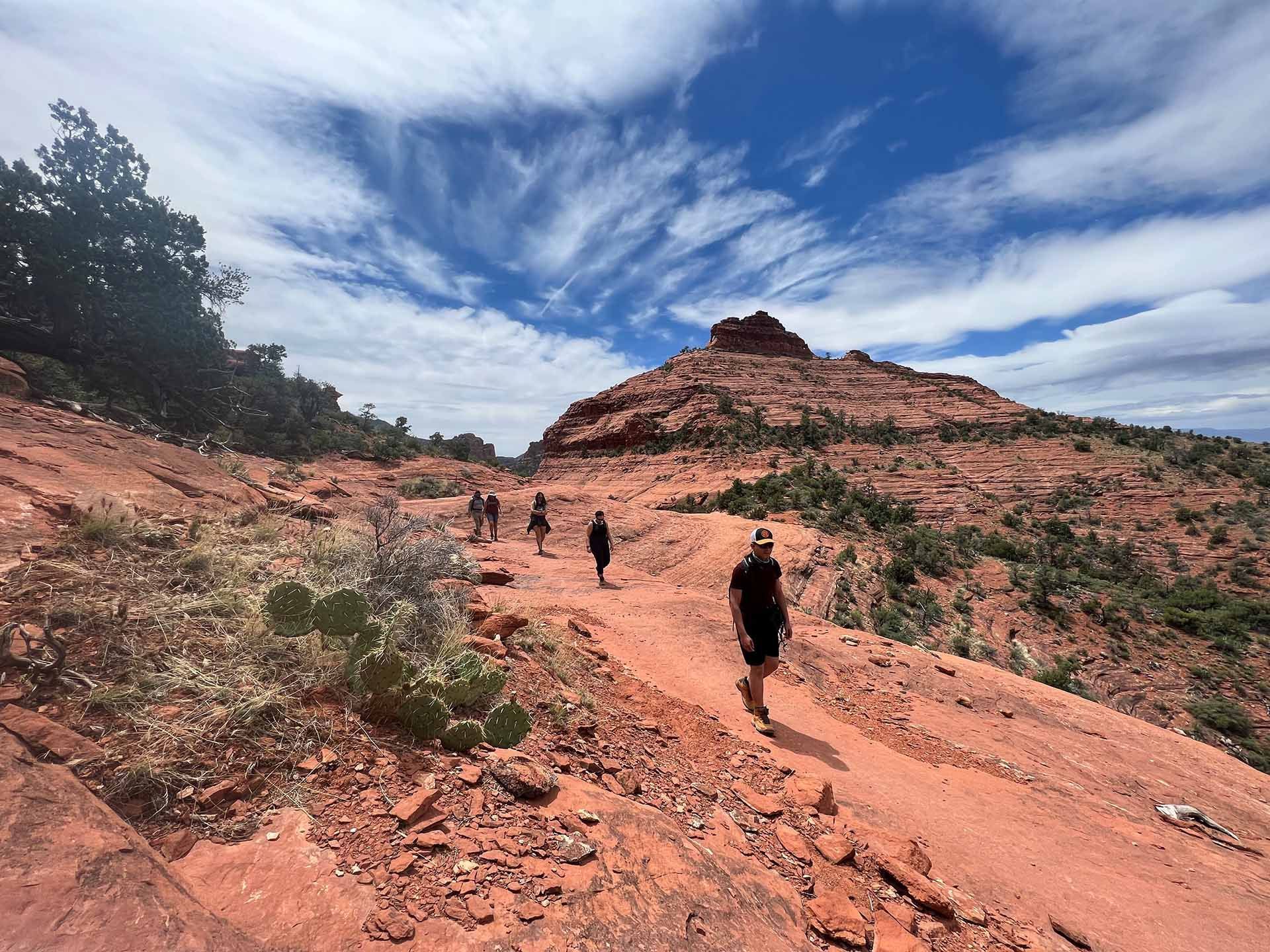
June is when summer settles into Red Rock Country, though Sedona's 4,350 ft elevation keeps it noticeably milder than the Phoenix valley below. Daytime highs rise steadily through the month, from about 86F in early June to 94F by late June, and rarely drop below 77F or top 100F. (You'll see some guides quote 95-100F, but that's really Phoenix territory; true Sedona Junes average the low-to-mid 90s.) Most climate datasets agree on the broad picture: monthly average highs land around 92-93F with lows in the upper 50s to low 60s.
The mornings and nights are the best news for hikers. Overnight lows climb from roughly 61F early in June to 68F late, and rarely fall below 54F, so pre-dawn starts feel comfortable. Daylight is long and steady, about 14 hours 21 minutes to 14 hours 30 minutes, with the earliest sunrise near 5:12 a.m. around June 12 and sunsets between 7:35 and 7:44 p.m. That gives you usable light by around 5 a.m. to beat the heat.
Rain is sparse early and builds late. Sedona averages only about 0.35 inches of precipitation for the month, but the chance of a wet day climbs from roughly 5% at the start of June to about 14% by month's end as the monsoon approaches. The short version: June is dry early and wetter late.
Advantages of Visiting Sedona in June
June trades spring's perfect temperatures for long days, thinner crowds, and a different kind of red rock light. With an early-start discipline, it can be a rewarding and quieter time to experience Sedona.
Fewer Crowds Than Spring
Spring (March to May) is Sedona's peak season, and June is meaningfully quieter as summer heat and the looming monsoon deter many visitors. Keep it relative, though: locals still call June one of the busier months, and popular weekends bring heavy demand. Early mornings and weekdays are noticeably calmer than April or May, which means more solitude on the trail and a better shot at parking if you arrive at dawn.
Long Days and Early Light
With daylight stretching past 14 hours and sunrise near 5:12 a.m., June gives you the longest usable window of the year. That extra light is the secret to beating the heat: you can be on the trail at first light, summit an exposed route like Cathedral Rock before the sun bakes the slickrock, and still have the whole evening for a sunset viewpoint.
A Cooler Escape From the Valley
Most June visitors are heat refugees from Phoenix and Tucson, where temperatures routinely hit 100F and beyond. Sedona's low-90s highs and mid-60s nights run roughly 10F cooler than Phoenix by day, so they feel like real relief. For a quick desert getaway, the red rocks are one of the closest, most scenic escapes from the valley heat.
Challenges of Visiting Sedona in June
A little planning goes a long way in June. Heat, the onset of monsoon, and weekend parking pressure are the three things that most often catch first-time summer visitors off guard.
Heat on Exposed Red Rock
Daytime highs in the low-to-mid 90s combine with intense high-elevation sun on shadeless red rock. Arizona State Parks urges visitors to avoid the outdoors during the hottest part of the day, 10 a.m. to 5 p.m., and notes that heat-related rescues happen every summer. The plan is straightforward: start hikes at dawn (usable light arrives around 5 a.m.), finish exposed routes by mid-morning, and carry far more water than you think you'll need, since red rock trails offer little shade and no water sources.
Monsoon Onset and Flash Floods
Arizona's monsoon season officially runs June 15 through September 30, so late June can deliver the season's first afternoon thunderstorms. These storms produce sudden flash flooding in canyons and washes, where water can rise from rain falling miles upstream, plus lightning that can strike up to 60 miles from the rain itself. Finish canyon and wash hikes by midday, never cross a flooded trail or roadway (just 6 inches of moving water can knock an adult off their feet), and if you hear thunder, head for a building or hard-top vehicle.
Weekend Parking and Shuttle Logistics
Even though June is quieter than spring, popular weekends still strain Sedona's limited parking. When the free Sedona Shuttle is running (Thursday through Sunday), the Cathedral Rock and Soldier Pass trailhead lots are closed to the public, so you have to use the shuttle to reach them. The Soldier Pass route (Line 14) is capped at 300 riders per day and fills fast. Slide Rock State Park parking also fills early on June weekends, so plan to arrive at opening.
Best Things to Do in Sedona in June
The June playbook is all about timing. Tackle exposed slickrock at sunrise, lean on the free shuttle for the most-impacted trailheads, and save midday for water or shade.
- Sunrise hikes (start by 5 to 5:30 a.m.): Cathedral Rock and Soldier Pass are the iconic choices, and you reach both via the free Sedona Shuttle, which runs Thursday through Sunday, 7:00 a.m. to 5:30 p.m. Soldier Pass parking is always closed from 6 p.m. to 8 a.m. under Forest Service rules, so the shuttle is your reliable option. It also serves Little Horse, Dry Creek Vista (the access point for Devil's Bridge), and Mescal.
- Cool off at the creek: Slide Rock State Park, about 15 minutes up Oak Creek Canyon, is the classic Sedona swimming hole. Arrive at opening to get a parking spot on June weekends. One caution: Oak Creek can develop elevated E. coli levels, especially after monsoon rainstorms wash animal waste into the creek, so swimming is at your own risk and the park posts advisories. Check before you wade in.
- Know the passes: shuttle riders pay nothing, since parking and rides at the North SR 179, Posse Grounds, and West SR 89A Park & Rides are free, with no Red Rock Pass needed. If you drive to most other developed Coconino National Forest trailheads instead of using the shuttle, a Red Rock Pass is required to park.
One more heads-up for late June: in past extreme-heat summers, service to the Mescal and Dry Creek Vista trailheads has been reduced or cut, so confirm the current schedule.
When Is the Best Time to Visit Sedona?
Sedona's hiking calendar shifts month to month, and June sits at the hinge between spring's comfort and summer's heat. Here's how the year stacks up:
- March-May: ideal temperatures, wildflowers, and peak comfort, along with Sedona's busiest, most expensive season.
- June: long days, fewer crowds than spring, and low-90s heat. Excellent if you commit to dawn starts and watch for the first monsoon storms after June 15.
- July and August: hot, with the monsoon in full swing. Dramatic skies, but real flash-flood and lightning risk in canyons.
- September and October: cooling off into a strong second window after spring.
- November-February: cold mornings, occasional high-viewpoint snow, and the lowest crowds of the year.
So is June a good time to visit Sedona? Yes, for travelers who prize quieter trails, the longest days of the year, and a cooler alternative to Phoenix, and who are willing to hike early and stay weather-aware. If your top priority is all-day comfort on exposed trails, spring or fall will serve you better.
Frequently Asked Questions
Is June a good time to visit Sedona?
Yes, with the right strategy. June brings fewer crowds than the spring peak, the longest daylight of the year, and temperatures roughly 10F cooler than Phoenix. The trade-offs are low-90s afternoon heat and the start of monsoon storms after June 15. Hike at dawn, stay hydrated, and watch the afternoon skies, and June can be excellent.
How hot does Sedona get in June?
Daytime highs rise from about 86F in early June to 94F by late June, rarely below 77F or above 100F. Overnight lows climb from about 61F to 68F. Sedona's 4,350 ft elevation keeps it in the low-to-mid 90s, cooler than nearby Phoenix, which is where the often-quoted 95-100F figures actually apply.
Is it too hot to hike in Sedona in June?
Not if you start early. The exposed red rock and intense high-elevation sun make midday brutal, so Arizona State Parks recommends avoiding the outdoors from 10 a.m. to 5 p.m. With usable light by about 5 a.m., begin at dawn, finish exposed routes by mid-morning, and carry far more water than feels necessary, because there's no shade or water on most trails.
Does monsoon season affect Sedona in June, and when does it start?
Arizona's monsoon season officially runs June 15 through September 30, so late June can bring the first afternoon thunderstorms. These storms cause sudden flash flooding in canyons and washes and produce lightning that can strike up to 60 miles from the rain. Finish canyon hikes by midday, and if you hear thunder, seek a building or hard-top vehicle.
Is Sedona crowded in June?
June is less crowded than spring (March to May), Sedona's peak season, as summer heat and the approaching monsoon thin the visitor count. Even so, locals still consider June fairly busy, and popular weekends fill the Cathedral Rock and Soldier Pass lots, which triggers shuttle-only access, and pack Slide Rock State Park. Early mornings and weekdays are noticeably quieter.
Can you swim in Sedona in June at Slide Rock or Oak Creek?
Yes, Slide Rock State Park on Oak Creek is the classic swimming hole, but two cautions apply. Parking fills early on June weekends, so arrive at opening. And Oak Creek can have elevated E. coli, especially after monsoon rainstorms wash animal waste into the creek, so swimming is at your own risk and the park posts water-quality advisories you should check first.
What time should I start hiking in Sedona in summer?
At dawn. June daylight begins around 5:12 a.m., giving you usable light by about 5 a.m. Aim to be on exposed trails like Cathedral Rock at first light and finished before the 10 a.m.-5 p.m. heat window. An early start also helps you grab limited parking before lots fill, and gets you off canyon trails before any afternoon monsoon storms build.
What should I pack for Sedona in June?
Sun and heat protection lead the list: a UPF long-sleeve sun shirt, wide-brim hat, polarized sunglasses, and SPF 50+ sunscreen. Bring more water than feels necessary (at least 2-3 liters), electrolytes, and salty snacks. Add sticky-soled hiking shoes for slickrock, a headlamp for dawn starts, and a light rain shell for late-June monsoon showers.
What to Pack for Sedona in June
- UPF 50+ lightweight long-sleeve sun shirt (light color)
- Wide-brim sun hat with neck protection
- Polarized sunglasses to cut glare off the red rock
- SPF 50+ mineral sunscreen and SPF lip balm
- At least 2-3 liters of water per person (trails have no water sources)
- Electrolyte tablets or powder
- Salty snacks (pretzels, salted nuts, jerky)
- Hiking shoes with sticky-rubber soles for slickrock
- Headlamp for pre-dawn dawn starts
- Cooling neck wrap or buff
- Lightweight packable rain shell for late-June monsoon showers
- Swimsuit and quick-dry towel for Slide Rock / Oak Creek
Explore Sedona With Four Season Guides
June rewards smart timing: dawn starts, shaded breaks, and monsoon awareness. Let Four Season Guides handle the route choice, shuttle and parking logistics, and pacing so you experience the red rocks safely at their best. Explore our guided Sedona adventures and reserve your spot.
Four Season Guides, 506 N Grant St suite o, Flagstaff, AZ 86004, United States
+19285251552
35.19653980, -111.62000560
Read More