Angels Landing Hike: Permits, Chain Section & What to Expect
Key Takeaways
- Angels Landing is a 5.4-mile roundtrip hike with 1,488 feet of elevation gain requiring a permit from a competitive lottery system
- Permits are allocated through a seasonal lottery (January-February) and day-before lottery on Recreation.gov
- The iconic chain section is challenging but manageable for most hikers with basic fitness; takes 3-5 hours total
- Safety is paramount the trail has had fatal accidents; proper precautions, timing, and weather awareness are essential
- Spring (March-May) and fall (September-November) offer the best conditions with moderate temperatures and lower crowds
Angels Landing Trail Overview
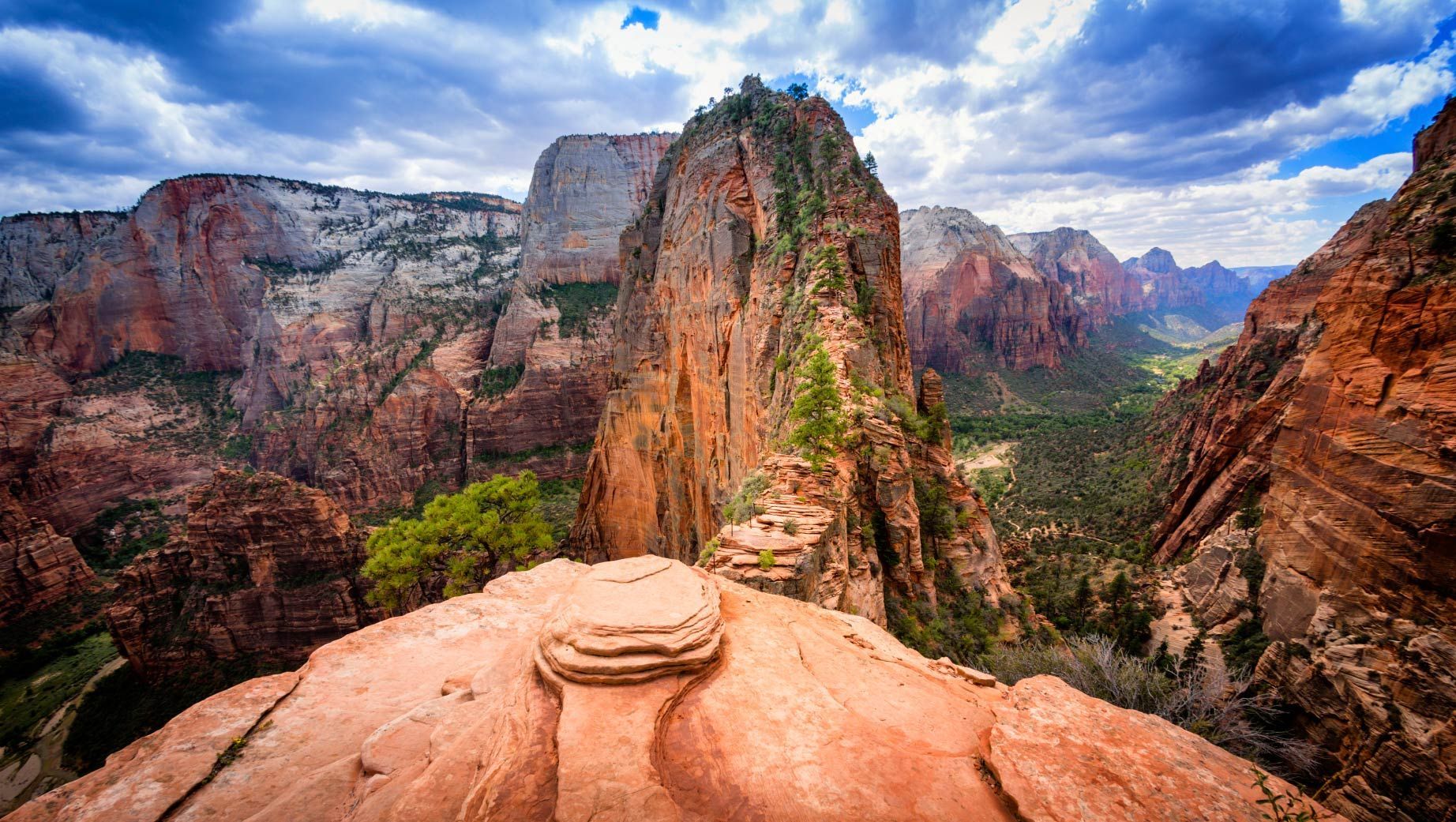
Angels Landing stands as one of the most iconic and sought-after hikes in the United States. Located within Zion National Park in Utah, this dramatic trail culminates at a narrow rock summit offering 360-degree views of the Virgin River gorge and surrounding red cliffs.
The hike combines accessible sections, challenging switchbacks, and the famous chain-assisted rock scramble that makes it both exhilarating and memorable.
What makes Angels Landing special is not just the physical challenge it's the combination of natural beauty, technical elements, and the sense of accomplishment upon reaching the summit.
The trail passes through multiple ecosystems, from riparian areas to high-desert terrain, offering constant visual rewards throughout the journey.
Whether you're an experienced hiker or stepping up to a more challenging adventure, Angels Landing delivers an unforgettable experience.
Trail Stats at a Glance
| Metric | Details |
|---|---|
| Distance | 5.4 miles roundtrip |
| Elevation Gain | 1,488 feet |
| Duration | 3-5 hours (average 4 hours) |
| Difficulty | Moderate to challenging |
| Permit Required | Yes, competitive lottery system |
| Best Season | Spring (March-May) and Fall (September-November) |
| Trail Type | 4,040 feet |
| Summit Elevation | 5,520 feet |
How to Get an Angels Landing Permit in 2026
Since 2022, the National Park Service has required permits to hike Angels Landing due to overcrowding and safety concerns.
This permit system is managed through Recreation.gov and operates on two primary mechanisms: the seasonal lottery and the day-before lottery.
Understanding how these systems work is crucial for planning your hike.
The permit requirement has significantly improved trail conditions and safety. With fewer hikers on the trail at any given time, overcrowding on the chain section has decreased, making the experience safer and more enjoyable for everyone.
Seasonal Lottery (January-February)
The seasonal lottery draws occur in January and February each year and determine permit availability for the following hiking season (March through November). This lottery typically opens for applications around early January and runs for a limited period.
- Entries in the seasonal lottery are submitted through Recreation.gov during the application window
- Winners are drawn randomly from all submitted entries
- Approximately 300-400 permits are issued daily during peak season
- Winners receive notification and have a limited time window to claim their permits
Day-Before Lottery on Recreation.gov
If you didn't win the seasonal lottery, don't despair. Recreation.gov releases remaining permits through a day-before lottery system. This typically releases 50-100 permits daily at midnight Mountain Time for hiking the following day.
- Set up Recreation.gov account in advance to speed up the application process
- Permits release at midnight, so submit your entry as soon as the window opens
- Competition is fierce winners are drawn randomly from all submissions received
- You receive instant notification if your entry wins; permits typically need to be claimed immediately
Tips to Improve Your Permit Chances
- Apply for the seasonal lottery every year even with low odds, multiple applications increase chances
- Aim for shoulder season dates (late March-April or September-October) when competition is slightly lower
- Tuesday through Thursday permits are often less contested than weekends
- Have backup dates selected flexibility significantly improves your odds of securing a permit
- Enter the day before lottery even if you won seasonal permits having options prevents disappointment
The Trail: Section by Section
Understanding the trail's layout helps you mentally prepare and set realistic pacing.
Angels Landing consists of four distinct sections, each with unique characteristics and challenges.
The Grotto Trailhead to Refrigerator Canyon
The hike begins at the Grotto Picnic Area, the official trailhead for Angels Landing. This section is relatively easy, following a well-maintained path alongside the Virgin River.
You'll pass under the shade of cottonwood and Douglas fir trees, enjoying pleasant scenery and mostly flat terrain.
Refrigerator Canyon marks the transition point where the trail begins ascending more steeply. The canyon earned its name from the cool air that funnels through it a welcome relief on hot days. This section is approximately 1.4 miles and gains about 350 feet of elevation. Most hikers spend 30-45 minutes on this segment.
Tips for this section: Start early to ensure you complete the entire hike in daylight. Refill water here if your supply is low this is your last reliable water source before the summit.
Walter's Wiggles: 21 Switchbacks
Named after Walter Ruesch, the man who built this iconic section in the 1920s, Walter's Wiggles consists of 21 tightly spaced switchbacks carved into the rock. This section is relentless you're climbing consistently with minimal flat areas for recovery.
The switchbacks gain approximately 480 feet of elevation over 1 mile. While not technically difficult, the mental and physical challenge of repetitive climbing affects many hikers here.
The good news: the scenery improves dramatically with every turn, and the sense of accomplishment is real.
Mental strategy matters on Walter's Wiggles.Rather than looking at the full climb ahead, focus on reaching the next switchback. Count them if it helps knowing you're past 10, 15, or 20 provides psychological momentum. Average time: 45 minutes to 1 hour.
Scout Lookout: The Decision Point
Scout Lookout, at 6,050 feet elevation, represents a crucial decision point. This sandy, exposed area offers outstanding views and provides a natural rest area. Many hikers turn back here, deciding the remaining chain section exceeds their comfort level. This is completely reasonable you've already completed a solid 3.5-mile hike with excellent views.
Scout Lookout provides the last opportunity to judge wind conditions, assess your energy levels, and decide whether to proceed to the summit. On extremely windy days or if you're experiencing fatigue, Scout Lookout offers a satisfying turnaround point.
The section from Walter's Wiggles to Scout Lookout (about 0.3 miles) involves hiking on sand and light rock scrambling. It's not technical but requires watching your footing on the loose terrain.
The Chain Section to the Summit
The final 0.5-mile section from Scout Lookout to the summit is what makes Angels Landing famous. Two steel cables anchored in the rock provide security as you traverse the narrow ridge. The exposure is real the ridge slopes steeply on both sides but the chains are substantial and the difficulty is manageable for people with basic fitness.
Key points about the chain section:
- The ridge width varies from 2-10 feet; it's never as narrow as photos suggest
- Cable sections alternate with scrambling sections; you don't grip the chain continuously
- Good footwear with solid grip is essential; slippery shoes significantly increase difficulty
- Pass on the right side coming up, left side coming down to manage trail traffic
- In high winds or rain, the chains become significantly more challenging and potentially hazardous
- The chain section usually takes 20-30 minutes to ascend and 25-35 minutes to descend (slightly longer due to caution).
Is Angels Landing Dangerous? Safety & Deaths
Direct answer: Angels Landing is not inherently dangerous for properly prepared hikers, but it does carry real risks that require respect and caution.
The trail receives approximately 300,000+ hikers annually, with the vast majority completing it safely. Over the past two decades, there have been approximately 12-15 fatalities on Angels Landing. This represents roughly 1 death per 20,000-25,000 hikers, which is statistically very low. However, these deaths are real and preventable through proper precautions.
Common factors in accidents include:
- Severe wind gusts (especially in spring) destabilizing hikers on exposed ridges
- Overestimating ability and attempting the hike despite warning signs of fatigue or poor fitness
- Slipping on wet rock or loose sand due to inadequate footwear or rushing
- Hiking in poor lighting conditions or darkness near sunset
- Ignoring weather warnings and hiking during thunderstorms or extreme wind
How to hike safely: Start early, turn back if conditions worsen, use proper footwear, stay off the ridge in high winds or electrical storms, and honestly assess your fitness level before committing to the full hike.
Can Beginners Hike Angels Landing?
Yes, but with important caveats. Beginners with solid baseline fitness can successfully complete Angels Landing, but they should understand that this is not an entry-level hike. It's a 5.4-mile roundtrip with nearly 1,500 feet of elevation gain, and it includes a non-trivial technical section.
Before attempting Angels Landing, beginners should:
- Complete several intermediate hikes (3-5 miles, 500-800 feet gain) to build baseline fitness and confidence
- Practice on elevation gain Walter's Wiggles' relentless climbing is the primary challenge
- Invest in proper hiking boots with excellent grip and ankle support
- Hike with experienced friends or hire a local guide for your first attempt
- Plan to stop at Scout Lookout if the chain section feels beyond your comfort it's a respectable turnaround point
Many beginners successfully complete Angels Landing. The key is honest self-assessment and being willing to turn back if conditions or your energy levels don't support continuing.
Best Time to Hike Angels Landing
Timing dramatically affects your Angels Landing experience. Temperature, weather patterns, daylight hours, and crowd levels vary throughout the year, and some seasons are significantly better than others.
Spring (March-May): This is arguably the best season. Temperatures are moderate (50-70°F), wildflowers bloom, and water flows beautifully throughout the canyon. However, spring brings variable weather and occasional high winds. Book permits for April or early May for the sweet spot.
Summer (June-August): Hot (85-95°F+), crowded, and exhausting due to heat exposure. The permit lottery still operates, but fewer experienced hikers attempt it. Not recommended unless you start before dawn and finish early.
Fall (September-November): Excellent season with cooling temperatures (55-75°F), clear skies, and comfortable hiking conditions. Crowds thin out after Labor Day. October is particularly outstanding.
Winter (December-February): Trails may be icy; permits are less competitive, but weather is unpredictable. Not recommended for average hikers due to hazardous conditions.
Sunrise vs. Sunset Hikes
Sunrise hikes: Starting at dawn (typically 6:00-7:00 AM) offers cooler temperatures, fewer crowds on the trail, and the satisfaction of watching sunrise from high elevation.
You finish by early afternoon, allowing time for exploring nearby Zion trails. This is the preferred approach for most serious hikers.
Sunset hikes: While the sunset from Angels Landing is stunning, hiking down the chain section in fading light introduces real hazards.
The chains become harder to grip in darkness, and judging footing becomes difficult. Unless you're starting extremely early and have a permit for that specific date, avoid planning a sunset summit.
What to Bring on the Angels Landing Hike
Proper gear and supplies are essential for a safe, enjoyable Angels Landing experience.
This is not a casual walk you need to be prepared for a multi-hour mountain hiking challenge.
Hiking boots: Not optional.
- Proper hiking boots with ankle support and aggressive tread are essential for Walter's Wiggles and the chain section.
- Runners or casual sneakers significantly increase injury risk.
Water: Bring 2-3 liters minimum.
- There's no water after Refrigerator Canyon.
- Consider a hydration pack for hands-free carrying.
Snacks/fuel: Trail mix, energy bars, electrolyte drink mixes, and fruit for sustained energy through the entire hike.
Sun protection: Sunscreen (reapply frequently), sunglasses, and a wide-brimmed hat.
- The ridge has zero shade.
Layers: Mornings are cool; bring a light jacket that you can tie around your waist for afternoon heat.
First aid: Blister treatment, pain relievers, and basic first aid supplies for minor injuries.
Headlamp: Essential if there's any chance of finishing near sunset.
- Dead batteries cause dangerous situations.
Permit: Print your permit or save the digital copy on your phone.
- Rangers check at the trailhead.
Angels Landing with Kids: Age Recommendations
Families successfully hike Angels Landing every day, but parent judgment is critical.
The trail's suitability depends more on individual child maturity, fitness, and comfort with exposure than on specific age.
General age guidelines:
Under age 8: Generally not recommended. The hike's length, elevation gain, and exposure exceed most young children's comfort and safety.
Ages 8-12: Possible with experienced, fit children and realistic expectations. Stop at Scout Lookout if the chain section seems too challenging.
Ages 13+: Most teenagers can complete the full hike if they have baseline hiking fitness and hiking boot experience.
Family hiking tips:
Use child harnesses or leashes on exposure sections, consider hiring a guide, plan plenty of breaks, set realistic turnaround times, and emphasize that stopping at Scout Lookout is completely acceptable.
Frequently Asked Questions
How long does the Angels Landing hike take?
Most hikers complete the full hike in 3-5 hours, depending on fitness level, acclimatization, and how long you spend resting and enjoying views. Fit hikers may finish in 2.5-3 hours; those less experienced might take 5-6 hours. The permit system assumes 3-4 hours for planning purposes.
Can I do Angels Landing as a day trip from Las Vegas?
Technically yes—it's a 5-6 hour drive each way from Las Vegas, leaving 3-4 hours for hiking. This is exhausting and not recommended. A proper Las Vegas to Angels Landing day trip requires leaving before dawn and accepting a late-night drive home. Most visitors stay 1-2 nights in Springdale (Zion's gateway town) for a more relaxed experience.
What's the best footwear for Angels Landing?
Waterproof hiking boots with aggressive tread are ideal. The rock is often dusty and sometimes slippery, and scrambling sections require solid ankle support. Brands like Salomon, Merrell, and La Sportiva are popular with Angels Landing hikers. Some experienced hikers use approach shoes, but boots provide superior protection and confidence on exposure.
How many angels landing deaths occur annually?
There are approximately 1-2 fatalities per year on Angels Landing, typically during spring and early summer. Over the past two decades, roughly 12-15 people have died from falls. While this sounds concerning, it represents about 1 death per 20,000-25,000 hikers. Most accidents involve hikers ignoring weather warnings, overestimating ability, or attempting the hike in dangerous conditions.
Can I hike Angels Landing with a fear of heights?
This depends on severity. If your fear is manageable and you can grip the chains while accepting exposure, many fear of heights hikers complete the chain section successfully. Scout Lookout offers an excellent turnaround point if the exposure becomes overwhelming. The ridge is wider than photos suggest, which often helps people cope.
Consider a guided hike where a professional can provide reassurance and technique guidance.
What are the consequences of hiking Angels Landing without a permit?
Rangers enforce the permit system.
Hiking without a permit results in citations (fines up to $130) and potential ejection from the park. Beyond legal consequences, hiking without a permit contributes to overcrowding that compromises safety for everyone. The permit system exists specifically to manage crowds and improve safety it's worth respecting.
Angels Landing represents one of the most rewarding hiking experiences in the United States.
With proper preparation, realistic expectations, and respect for the trail's inherent challenges, you'll create memories that last a lifetime.
If you're considering other Zion adventures, explore our guide to the best hikes in Zion
and learn how to prepare for strenuous
hikes in Arizona
Four Season Guides, 506 N Grant St suite o, Flagstaff, AZ 86004, United States
+19285251552
35.19653980, -111.62000560
Read More