The Zion Narrows: Complete Hiking Guide for Top-Down & Bottom-Up Routes
Key Takeaways
- The Narrows is Zion's most iconic hike, featuring 2,000-foot canyon walls and the Virgin River running through it.
- Bottom-up day hikes are perfect for beginners; most visitors hike 2-5 miles from the Riverside Walk trailhead.
- Top-down overnight permits allow 20-mile backpacking adventures from Chamberlain's Ranch to the exit.
- Flash flood danger is real; check Virgin River flow rates (safe: <150 CFS, moderate: 150-250 CFS, dangerous: >250 CFS).
- Best season is May-October, with summer offering warmest water (60-65°F) but highest crowds.
- Canyoneering shoes and trekking poles are essential gear; dry bags protect electronics and clothing.
What Is The Narrows in Zion National Park?
The Narrows is a spectacular 16-mile slot canyon carved by the Virgin River through the heart of Zion National Park.
Named for its dramatic narrow sections where towering 2,000-foot sandstone walls rise almost vertically from the river.
The Narrows represents one of the most unique and challenging hiking experiences in the American Southwest. Unlike typical mountain trails, hiking The Narrows means wading through the river itself, creating an immersive adventure where water is both the trail and the destination.
The canyon's geology tells a story of millions of years of erosion, with the Virgin River carving through layers of red Navajo sandstone, creating formations so spectacular that hikers often spend as much time photographing as they do hiking.
The hike is divided into two distinct experiences: the bottom-up day hike (starting from Riverside Walk) and the top-down overnight backpack (starting from Chamberlain's Ranch). The bottom-up route is more accessible, requiring no permits and allowing flexible turnaround points.
The top-down route is considered an advanced backpacking adventure requiring overnight permits and extensive planning.
Both offer equally stunning but fundamentally different experiences.
The bottom-up approach lets you control distance and difficulty, while the top-down route immerses you in the complete canyon ecosystem.
Why The Narrows Is Zion's #1 Must-Do Hike
The Narrows stands as the crown jewel of Zion's hiking experiences for several compelling reasons.
First, the geological drama is unparalleled towering canyon walls create a sense of immersion that few other hikes can match.
Second, the combination of hiking and water creates a unique multi-sensory experience unlike anything found on typical mountain trails.
Third, the hike offers remarkable flexibility; beginners can enjoy a short 2-mile walk, while experienced backpackers can tackle a full 20-mile journey.
The Narrows also provides remarkable accessibility to wilderness adventure. Most of the bottom-up route follows a well-established path from Riverside Walk, meaning you don't need advanced scrambling skills to experience the canyon's magic.
The hike is genuinely iconic it's the image most people associate with Zion National Park. Many consider it a transformative experience, where the canyon's scale and beauty create a profound connection with nature.
Additionally, The Narrows offers photo opportunities that rival any location on Earth.
The vertical canyon walls provide dramatic framing, while the river creates dynamic light reflections throughout the day. Experienced photographers often return multiple times to capture different light angles and seasonal variations.
The Narrows Bottom-Up Route (Day Hike)
The bottom-up route is the most popular way to experience The Narrows. This approach offers flexibility you can hike as far or as little as you want, turning back whenever you choose.
Most day hikers complete 3-5 miles roundtrip, though ambitious adventurers can push further into the canyon. The route requires no special permits, just entry to Zion National Park and some basic preparation.
The beauty of the bottom-up approach is that you control the difficulty level through your turnaround point decision.
Riverside Walk to the Canyon Entrance (1 Mile)
The Riverside Walk is where your Narrows journey begins. This initial mile is actually the Riverside Walk trail itself, a well-maintained paved path that follows the Virgin River through a beautiful riparian corridor.
The walk features hanging gardens, where water seeps from canyon walls supporting lush vegetation with native plants including ferns, wildflowers, and cottonwood trees.
This section provides excellent views of the canyon entrance and builds anticipation for the wading adventure ahead.
The Riverside Walk ends at the Temple of Sinawava, where the official Narrows hiking area begins. This transition point marks where the canyon walls start narrowing dramatically and the river becomes your primary path.
The difficulty rating for the Riverside Walk is easy it's paved and relatively flat, making it accessible for young children, elderly hikers, and anyone with mobility limitations. Even if you don't continue into the Narrows, the Riverside Walk alone is a worthwhile 2-mile roundtrip outing.
Orderville Canyon Junction (2 Miles In)
Beyond the Temple of Sinawava, you'll wade into the Virgin River. The first major landmark is Orderville Canyon Junction, reached after approximately 2 miles of river hiking from the trailhead.
This scenic side canyon entrance is a beautiful spot and represents a natural turning around point for many day hikers. Orderville Canyon offers an alternative route with unique geology a narrower side canyon that provides dramatic photo opportunities and a slightly different experience from the main Narrows corridor.
The water depth at Orderville varies seasonally, ranging from ankle-deep to knee-deep depending on river flow. This section is considered moderate difficulty due to water wading and occasional rock scrambling.
The canyon walls begin closing in noticeably, creating the iconic Narrows experience.
Many families with older children turn back here, having completed a solid 4-mile round trip.
The round-trip hike to Orderville typically takes 2-4 hours depending on water conditions and hiking pace.
Wall Street Section (3.5 Miles In)
The Wall Street section represents the most dramatic narrow canyon portion, reached at approximately 3.5-4 miles from the Riverside Walk trailhead. Here, the canyon walls rise dramatically on both sides, creating the quintessential slot canyon experience. The walls are nearly vertical and tower 1,200 feet above the river, creating a cathedral-like atmosphere that humbles even experienced hikers.
The walls seem to touch overhead in places, and the light filtering through creates otherworldly illumination patterns that shift throughout the day. Water depth increases in this section, often reaching waist-deep or deeper depending on flow conditions. The difficulty rating is moderate to challenging.
Navigation requires careful footwork over river rocks and occasional deeper water crossings.
Many day hikers consider Wall Street the ultimate Narrows destination it's the most photogenic section and worth the extra effort to reach.
A round trip to Wall Street typically takes 6-8 hours depending on fitness level and water conditions. The extreme narrowness of Wall Street makes it feel like hiking through an alien landscape, with rock formations that have been sculpted by water into smooth, flowing shapes.
The Narrows Top-Down Route (Overnight Backpack)
The top-down route, also called the "backpacking" route, is a 20-mile overnight adventure starting from Chamberlain's Ranch north of the park.
This version offers the complete Narrows experience, traversing the full length of the canyon rather than short out-and-back day hikes. It's a serious backpacking expedition requiring permits, proper equipment, and wilderness experience. Many consider it the ultimate Utah backpacking adventure, offering complete immersion in the canyon environment.
The top-down route experiences Narrows hiking in chronological order through the canyon, starting from the narrow sections and progressing to wider areas as you descend. This creates a unique experience where the difficulty generally decreases as you hike, rather than increasing.Most hikers complete the route in 2-3 days, staying overnight in designated campsites along the canyon.
How to Get a Narrows Overnight Permit
Overnight permits for The Narrows top-down route are limited and in high demand. Permits are issued through Zion National Park's backcountry office and typically sell out months in advance for popular dates.
The application period opens in early December for the following year, and most desirable dates (May-October) are claimed within days. Competition for these permits is intense, with many applicants seeking only a handful of available slots.
To obtain a permit:
- Apply online through the Zion National Park website during the application window, typically around early December,
- Specify your preferred dates and party size (typically 1-12 people),
- Pay the per-person backcountry fee ($15 per person in recent years),
- Receive confirmation if your dates are approved.
Some permits are reserved for walk-ups, available 24 hours before your desired hike date, though availability is unpredictable. Walk-up permits require being at the backcountry office first thing in the morning. The permit specifies your exact entry and exit points.
Most top-down hikers begin at Chamberlain's Ranch (northern trailhead) and exit at the Temple of Sinawava (same as day hikers).
The permit typically allows 2-3 day adventures depending on your mileage. Be prepared to show your permit at ranger checkpoints along the route.
Campsite Options and Overnight Planning
Designated camping areas exist along the Narrows top-down route, with popular spots at Kolob Canyons, Mystery Canyon, and near Big Spring. Campsites are often in sandy areas away from the river to minimize environmental impact and reduce flash flood risk. Each designated campsite accommodates multiple groups, but space is limited. Popular campsites fill quickly, especially during peak season.
Water is available throughout (though you'll be wading in it anyway), but all river water must be filtered or treated before drinking. Many backpackers use water filters or purification tablets to make river water safe. Camp stoves are required for cooking no fires allowed to protect the fragile canyon environment.
Most backpackers complete the route in 2-3 days depending on fitness and water conditions. A realistic pace is 6-8 miles per day when accounting for water obstacles and camp setup. Pack out all garbage and follow Leave No Trace principles religiously.
Water Conditions and Flash Flood Safety
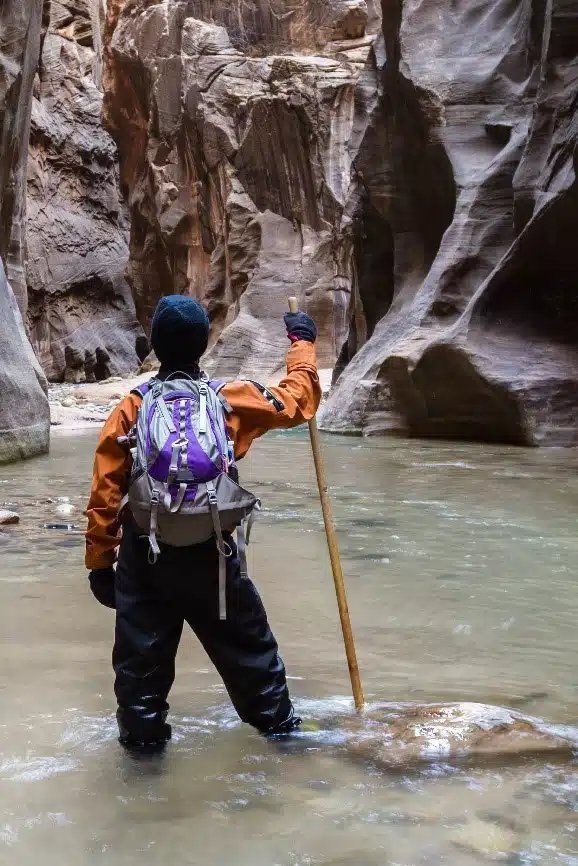
Water safety is paramount when hiking The Narrows. Flash flooding in slot canyons can occur with little warning and devastating consequences. Understanding water conditions and heeding weather alerts can mean the difference between a magical adventure and a life-threatening situation.
Slot canyons concentrate water from a wide drainage area into a narrow channel, amplifying flooding impact. Flash floods have been responsible for deaths in canyons throughout the Southwest, making this a serious concern.
How to Read the Virgin River Flow Rate (CFS Thresholds)
The U.S. Geological Survey monitors Virgin River flow rates in cubic feet per second (CFS). This measurement directly impacts hiking difficulty and safety.
Before hiking The Narrows, always check the current flow rate at the Courtright Lane gauge, available on the USGS Water Resources website. Understanding this data requires no expertise simply comparing the current reading to safety thresholds tells you whether conditions are suitable for your experience level.
| CFS Range | Difficulty Level | Hiking Recommendations |
|---|---|---|
| <100 CFS | Easy to Moderate | Ideal conditions. Water depth typically ankle to knee. Most suitable for families with children and beginners. River is manageable and safe for extended wading. |
| 100-150 CFS | Moderate | Good conditions for experienced hikers. Water depth reaches mid-calf to knee. Safe for day hikes with proper preparation. Current is noticeable but controllable. |
| 150-250 CFS | Moderate to Challenging | Water depth reaches knee to waist. Strong current. Requires excellent physical fitness and water comfort. Not recommended for families with young children. Wading becomes more technical. |
| >250 CFS | Dangerous | Strong currents, waist to chest-deep water, slippery rocks. Not recommended for day hikes. Top-down backpacking may be prohibited. Only experienced canyoneers should consider. |
| >400 CFS | Extremely Dangerous | Flash flood conditions possible. Park officials may close The Narrows. Do not enter the canyon under any circumstances. |
What to Do If a Flash Flood Warning Is Issued
Flash flood warnings for slot canyons should never be taken lightly. If a warning is issued while you're hiking The Narrows:
- Exit immediately don't wait to see if it actually happens,
- Move to higher ground if possible, ascending slickrock or low-elevation terrain, and
- Never underestimate the speed and power of slot canyon floods.
Water can rise 10-15 feet in minutes, traveling at high speeds with enough force to sweep away people and gear.
Before your hike, check the weather forecast and NOAA flash flood watches/warnings. If a warning is posted for the area, cancel or significantly modify your plans. The canyon is not worth the risk.
Many experienced hikers check weather within 3-4 hours of starting their hike, as afternoon thunderstorms can develop rapidly.
Remember that flash flooding can result from storms miles away upstream, not just storms overhead.
Essential Gear for Hiking The Narrows
Proper gear makes the difference between an enjoyable adventure and a miserable ordeal.
The Narrows demands specialized equipment designed for water hiking. Unlike typical backpacking or day hikes, Narrows hiking involves full immersion in water, requiring gear that performs well when wet and dry quickly.
Footwear: Canyoneering Shoes vs. Hiking Boots
Footwear choice is critical for Narrows hiking. Canyoneering shoes are specifically designed for water hiking with drainage holes, sticky rubber soles for slippery rock, and lightweight construction that works well when wet.
Popular options include Salewa Wildfire Edge or Merrell Moab Hiking Shoe models. These shoes grip wet rock surfaces far better than standard hiking boots, providing superior traction and confidence in water.
Some hikers successfully wear trail runners or water shoes, though these lack ankle support on rocky terrain. Regular hiking boots are generally not recommended they absorb water, become heavy, and take days to dry. Wet boots can cause blisters, lost traction, and overall discomfort. If bringing boots, pack them in a dry bag and wear water-specific footwear instead.
Most experienced Narrows hikers rent or purchase proper canyoneering shoes for this specific reason. You'll find rental facilities near the park offering Zion narrows rentals of shoes, dry bags, and full gear packages at daily rates typically ranging from $10-25 per item.
Dry Bags, Trekking Poles, and Other Must-Haves
Dry bags are essential for protecting electronics, extra clothing, and personal items. Waterproof dry bags keep cameras, phones, and dry clothes safe throughout your hike.
Pack multiple sizes a small 5-liter bag for phone/keys and a larger 10-15 liter bag for extra clothes and supplies.
Consider bringing a drybag specifically for your camera to protect this valuable equipment.
Trekking poles dramatically improve navigation and balance on slippery rocks. They reduce impact on knees when wading through water and help maintain stability on uneven riverbed.
Most successful Narrows hikers use poles, as they prevent falls and reduce fatigue. Lightweight aluminum poles are ideal for water hiking, as they dry quickly and resist corrosion.
Additional essential gear includes:
- Neoprene socks or water-friendly socks for warmth in cold water and blister prevention
- Lightweight merino wool or synthetic clothing (avoid cotton, which retains moisture and causes hypothermia)
- Backpack with hydration compatible design, waist belt for stability, and water-resistant fabric
- Sunscreen (SPF 50+) and lip balm with SPF (the white canyon walls reflect intense UV rays)
- Hat or cap to shield from sun and reflections that cause premature eye fatigue
- Water filter or purification tablets for treating river water safely
- High-calorie snacks (nuts, energy bars, trail mix, chocolate) for sustained energy throughout long hikes
- First aid kit with blister treatment, pain relievers, antibiotic ointment, and ankle wrap for sprains
- Headlamp with extra batteries for early starts or unexpected delays that extend into dusk
- Map and/or GPS device (phone with offline maps works if kept dry in waterproof case)
Best Time to Hike The Narrows
Seasonal timing profoundly affects your Narrows experience. Water temperature, flow rates, crowds, and weather vary dramatically throughout the year. Choosing the right season depends on your preferences regarding crowds, water temperature, flow conditions, and weather patterns.
Spring (March-May): Snowmelt Season
Spring offers the narrows zion best time to visit for photographers and experienced hikers, but presents significant challenges.
Snowmelt from the Markagunt Plateau elevates water flow significantly, often reaching 200-400+ CFS in March and April. Water temperatures are cold typically 40-50°F, requiring serious cold-water preparation and experience. Spring hiking requires excellent fitness, comfort in cold water, and understanding of hazard conditions.
Crowds are moderate (less than summer but more than winter). Days are longer, providing more hiking hours. Spring is ideal for experienced hikers and backpackers.
Avoid if you have limited water comfort or cold tolerance. Expect mud, slippery rocks, and potentially higher water crossings that may be impassable depending on daily flow.
Summer (June-September): Prime Season
Summer is the most popular season with good reason. Water temperatures reach 60-65°F, making extended water time tolerable for most hikers.
Flow rates typically stabilize at 100-200 CFS, providing moderate to manageable conditions. Days are longest, allowing maximum hiking time. However, summer brings peak crowds expect hundreds of hikers on the trail daily, especially July and August. Parking becomes extremely difficult, with full lots by mid-morning.
Summer is ideal for families with children and beginner hikers.
The warmer water makes extended wading comfortable. Plan for afternoon thunderstorms always start hikes early (by 6-7 AM) and monitor weather continuously.
Despite crowds, summer remains the most accessible season for casual hikers. If hiking in July or August, expect significant human traffic and plan accordingly with patience.
Fall (October-November): Shoulder Season
Fall represents an underrated sweet spot comfortable temperatures (daytime 65-75°F), excellent water conditions (50-60°F, flow rates 80-150 CFS), and dramatically fewer crowds than summer. October especially offers ideal hiking conditions with stable weather and reduced precipitation risks compared to summer.
November begins cooling significantly, and by late November water becomes quite cold (50°F or less), requiring neoprene protection. Fall is excellent for experienced hikers and those avoiding crowds. Days are still long enough for good hiking distances.
Permits are more available than summer, and parking is easier. October is arguably the best overall month for Narrows hiking excellent conditions without summer chaos.
Many experienced hikers prefer October specifically for these reasons.
Tips for Hiking The Narrows with Kids
Hiking The Narrows with children is possible and rewarding with proper preparation.
Here are essential strategies for family success:
- Start early: Begin before 9 AM to maximize daylight and avoid afternoon crowds and thunderstorms.
- Set realistic distance goals: Plan for 2-3 miles maximum roundtrip for children under 10. Let kids dictate pace rather than pushing distance.
- Check water conditions: Choose low-water seasons (summer or early fall) and low-flow days. Avoid spring snowmelt season entirely with children.
- Rent proper footwear: Ensure kids have canyoneering shoes, not regular hiking boots. Proper fit prevents blisters and improves confidence.
- Bring extra layers: Pack neoprene socks and lightweight jacket for warmth. Kids get cold faster than adults in water.
- Use trekking poles: Even young children benefit from poles for balance and stability on slippery rocks.
- Pack abundant snacks: High-calorie snacks maintain energy and motivation. Bring more snacks than you think you need.
- Make it playful: Turn hiking into exploration and discovery. Point out interesting rocks, water features, and wildlife.
- Build confidence gradually: Let kids wade into water slowly, never forcing deeper water. Some children need multiple visits to become comfortable.
- Supervise constantly: In slot canyon, maintain close supervision of all children. Slippery rocks and water depth pose hazards.
Getting There: Trailhead Access and Logistics
The bottom-up trailhead is accessed through Zion National Park's main Scenic Drive. From the park's south entrance, drive north on Scenic Drive approximately 5 miles to the Temple of Sinawava parking area (or ride the park's free Narrows Shuttle Bus). Parking fills quickly during peak season, so arrive early (before 8 AM) or use the shuttle service. The shuttle runs frequently during peak season and eliminates parking hassles.
For top-down backpacking, Chamberlain's Ranch is located approximately 17 miles north of Hurricane, Utah, requiring directions through private land. Check with park officials for current access procedures and shuttle information, as access sometimes changes seasonally. Most backpackers arrange shuttle transportation from Springdale to Chamberlain's Ranch, adding $25-40 to trip costs.
Zion National Park charges entrance fees ($35 per vehicle for 7-day passes, $20 for motorcycles, $20 for individuals entering on foot or bicycle). Plan for 45 minutes to 2 hours of driving from nearby towns like Springdale, Utah. Lodging is available in Springdale (just outside the park) or more distant options in St. George, Utah.
Frequently Asked Questions
How long is the Narrows hike in Zion?
Day hikes range from 2-8 miles roundtrip depending on how far upstream you venture. Most visitors hike 3-5 miles.
The Wall Street section at 3.5 miles is a popular turnaround point.
The full top-down backpacking route is approximately 20 miles one-way from Chamberlain's Ranch to the exit.
The time required varies based on water conditions and fitness level.
What is the difficulty level of The Narrows hike?
Difficulty varies by section.
The Riverside Walk (1 mile) is easy and suitable for young children.
The river section from Temple of Sinawava to Orderville Canyon (2 miles) is moderate. Wall Street (3.5 miles) is moderate to challenging with deeper water and slippery rocks.
The top-down backpacking route is challenging to strenuous, requiring excellent fitness and wilderness experience. Most people can handle the initial 2-mile section without difficulty.
Is water temperature a concern when hiking The Narrows?
Water temperature varies seasonally from 40°F (spring) to 65°F (summer).
Hypothermia is a legitimate concern in cold water, especially during extended exposure.
Wear neoprene socks, synthetic clothing, and consider a lightweight wetsuit in spring. Summer water (June-August) reaches comfortable temperatures.
Avoid extended exposure in very cold water, especially with children. Spring water requires serious cold-water preparation.
Can I hike The Narrows without getting wet?
No. Beyond the Riverside Walk, hiking The Narrows requires wading through the Virgin River. Water depth varies from ankle-deep to waist-deep depending on flow rates.
Embrace getting wet it's fundamental to the experience.
Pack dry clothes for afterward and use dry bags to protect electronics and valuables from water damage.
Should I rent gear or bring my own?
Renting is convenient and economical for most visitors. Zion area rental shops offer canyoneering shoes, dry bags, and full gear packages at reasonable daily rates.
Renting eliminates transportation hassles and provides locally-tested equipment proven effective in Narrows conditions.
Bring your own if you hike Narrows regularly or prefer personal equipment familiarity.
Rental facilities are located in Springdale near the park entrance.
What should I do if I encounter wildlife in The Narrows?
Wildlife encounters are rare but possible.
You might see mule deer, bighorn sheep, or ringtail cats. Give all wildlife space (at least 50 feet). Never feed animals or attempt close-up photography.
Mountain lions are extremely rare and attacks are exceedingly uncommon. If you encounter a mountain lion, make yourself appear large, back away slowly, and report the sighting to park rangers immediately.
Conclusion
The Narrows represents one of North America's most remarkable hiking experiences a unique journey through a sculpted slot canyon where water becomes your highway and towering sandstone walls frame every step. Whether you choose the accessible bottom-up day hike or the ambitious top-down backpacking route, The Narrows delivers unforgettable wilderness adventure that will remain etched in your memory for years.
Success depends on preparation, respect for water hazards, and proper gear. Check flow conditions, monitor weather, and honestly assess your fitness level before committing to this challenging hike. With adequate planning, even first-time hikers can safely enjoy this iconic Zion destination.
The Narrows awaits descend into the canyon and experience why it ranks among the best hikes in Zion National Park. Remember, successful hiking also requires preparing for strenuous hikes through proper training and gradual conditioning before attempting this challenging adventure.
Four Season Guides, 506 N Grant St suite o, Flagstaff, AZ 86004, United States
+19285251552
35.19653980, -111.62000560
Read More