Bright Angel Trail Guide: Grand Canyon's Most Popular Hike
Key Takeaways
- The Bright Angel Trail is the Grand Canyon's most popular hiking route, offering multiple turnaround options for all fitness levels
- Distance options range from 3 miles round-trip to 19 miles for experienced hikers reaching the Colorado River
- Seasonal timing is critical summer heat can be deadly, with temperatures exceeding 120 degrees Fahrenheit at the canyon floor
- The trail features three rest houses with water, making it safer than the South Kaibab Trail alternative
- Multiple turnaround points allow flexibility: 1.5-Mile Rest house, 3-Mile Rest house, Indian Garden, Plateau Point, or the Colorado River
- Spring (March-April) and fall (September-October) offer ideal hiking conditions with moderate temperatures.
Bright Angel Trail Overview: What Makes It Special
The Bright Angel Trail stands as the Grand Canyon's most popular hiking destination, attracting over 300,000 hikers annually.
Unlike the South Kaibab Trail, which offers no shade or water sources until the river, Bright Angel provides three reshouses with reliable water supplies, making it far more accessible to casual hikers and families.
Built in 1891 and maintained by the National Park Service, the Bright Angel Trail descends 4,380 feet from the South Rim to the Colorado River. The trail's gradual grade and multiple rest areas make it the ideal choice for those hiking into the Grand Canyon for the first time.
Whether you're interested in a quick morning hike or a multi-day backpacking adventure, the Bright Angel Trail offers options for every fitness level and experience.
The trail's popularity also reflects its historical significance and exceptional views. As you descend, you'll witness approximately two billion years of geological history, with each layer revealing different rock formations and insights into how the Grand Canyon was formed.
Bright Angel Trail Quick Stats
| Metric | Details |
|---|---|
| Full Distance (One Way) | 9.5 miles to Colorado River |
| Total Elevation Loss | 4,380 feet |
| Difficulty Rating | Moderate to Strenuous |
| Water Sources | 3 reshouses + Bright Angel Creek |
| Annual Hikers | 300,000+ |
Bright Angel Trail Turnaround Points
One of the greatest advantages of the Bright Angel Trail is flexibility. The National Park Service designates specific turnaround points, each offering unique perspectives of the canyon and varying levels of challenge. Choose your destination based on fitness level, available time, and water/shade requirements.
1.5-Mile Resthouse (3 Miles Round-Trip) - Best for Beginners
The 1.5-Mile Resthouse is the shortest and most accessible turnaround point, perfect for those testing their tolerance to elevation changes or families with young children.
At just 750 feet of descent, this option provides an excellent introduction to the Grand Canyon without overwhelming most hikers.
- Elevation gain/loss: 750 feet descent, 750 feet return ascent
- Estimated time: 1.5 to 2 hours round-trip
- Water available: Yes, at the resthouse
- Shade: Limited on lower portions
- Best for: Families, beginners, those with limited time
This distance is deceptive many hikers find the uphill return more challenging than expected. Take your time, drink plenty of water, and turn back if you experience dizziness or severe fatigue.
3-Mile Resthouse (6 Miles Round-Trip) - More Challenging
The 3-Mile Resthouse represents the most popular turnaround point for day hikers seeking a meaningful challenge. This destination requires solid fitness but remains achievable for most adults in reasonable condition. The increased elevation loss provides better views and a more immersive Grand Canyon experience compared to the shorter option.
- Elevation gain/loss: 1,500 feet descent, 1,500 feet return ascent
- Estimated time: 3 to 4 hours round-trip
- Water available: Yes, at the resthouse
- Shade: Some shade under rock formations
- Best for: Moderate hikers seeking a full morning/afternoon adventure
Many hikers report the 3-Mile Rest house as their sweet spot challenging enough to feel accomplished but not so strenuous as to risk injury or heat exhaustion. The return trip is almost entirely uphill, so pace yourself and bring substantial water reserves.
Indian Garden (9.2 Miles Round-Trip) - Shaded Oasis
Indian Garden represents a major milestone a lush oasis featuring cottonwood trees, Bright Angel Creek, and a ranger station. This location transforms from the arid upper canyon into a verdant microclimate that feels almost surreal. Many hikers find the abundant shade and flowing water worth the additional effort.
- Elevation gain/loss: 3,080 feet descent, 3,080 feet return ascent
- Estimated time: 5 to 7 hours round-trip
- Water available: Yes, from Bright Angel Creek and spigots
- Shade: Abundant cottonwood trees
- Best for: Experienced day hikers, those comfortable with 6+ hour outings
Indian Garden serves as the gateway to longer canyon adventures. Day hikers frequently stop here to rest and refuel before the challenging ascent. At night, Indian Garden transforms into a peaceful camping area for backcountry hikers.
Plateau Point (12.2 Miles Round-Trip) - Experienced Hikers Only
Plateau Point offers the most dramatic views for day hikers a precipice overlooking the Colorado River, visible nearly 1,000 feet below. Reaching Plateau Point on a day hike requires exceptional fitness and excellent time management. The trail from Indian Garden to Plateau Point descends another 1,300 feet before the viewpoint.
- Elevation gain/loss: 4,380 feet descent total, 4,380 feet return ascent
- Estimated time: 7 to 10 hours round-trip
- Water available: Only at Indian Garden (bring extra capacity)
- Shade: Extremely limited below Indian Garden
- Best for: Very experienced hikers in peak fitness, visiting spring or fall only
Most hikers attempting Plateau Point day hikes leave the rim before sunrise and return after sunset. This high-commitment hike should only be attempted by those with proven canyon experience and excellent physical conditioning.
Bright Angel Campground at the Colorado River (19 Miles Round-Trip) - Multi-Day Adventure
Reaching the Colorado River at Bright Angel Campground represents the ultimate Bright Angel Trail experience. This multi-day adventure requires a backcountry permit and careful logistics but offers incomparable rewards: intimate time with Bright Angel Creek, the raw power of the Colorado River, and nights under stars unpolluted by artificial light.
- Elevation gain/loss: 4,380 feet descent total, 4,380 feet return ascent
- Estimated time: Two-day minimum (10-12 hours hiking plus overnight rest)
- Water available: Bright Angel Creek (abundant at campground)
- Shade: Limited on exposed sections, abundant at creek camps
- Permits: Required through National Park Service lottery
- Best for: Experienced backpackers, those with multi-day availability
Backcountry camping at the Colorado River requires obtaining a permit through the highly competitive National Park Service lottery system. Even if you don't obtain a permit, several outfitters offer guided trips to Bright Angel Campground, providing all necessary logistics and expertise.
Which Turnaround Point Is Right for You?
| Turnaround Point | Best Suited For | Time Required |
|---|---|---|
| 1.5-Mile Resthouse | Families, beginners, limited time | 1.5-2 hours |
| 3-Mile Resthouse | Moderate hikers seeking challenge | 3-4 hours |
| Indian Garden | Experienced day hikers | 5-7 hours |
| Plateau Point | Very experienced hikers only | 7-10 hours |
| Colorado River | Experienced backpackers | 2+ days |
Bright Angel vs. South Kaibab Trail: Which Should You Hike?
Hikers considering a Grand Canyon descent often debate between the Bright Angel Trail and the South Kaibab Trail. Both trails descend into the canyon, but they offer dramatically different experiences. Understanding the key differences helps you choose the right trail for your fitness level, experience, and preferences.
| Feature | Bright Angel Trail | South Kaibab Trail |
|---|---|---|
| Water Sources | 3 reshouses + creek | None until river |
| Shade/Shelter | Yes, especially at Indian Garden | Virtually none |
| Difficulty | Moderate to strenuous | Very challenging |
| Crowds | Very popular, crowded | Less crowded, more solitude |
| Scenic Value | Excellent canyon views | Stunning, more dramatic |
| Best For | Most hikers, families, first-timers | Experienced hikers seeking challenge |
The choice between these trails ultimately depends on your experience level and comfort with risk.
For first-time canyon hikers, families, and most recreational hikers, the Bright Angel Trail remains superior due to its water access and established infrastructure.
The South Kaibab Trail suits experienced hikers seeking solitude and more dramatic scenery.
When to Hike Bright Angel Trail
Timing your Bright Angel Trail hike dramatically affects safety and enjoyment.
The Grand Canyon's inner canyon creates extreme microclimate conditions that shift dramatically with seasons. For the best time to hike Grand Canyon trails, plan your visit during spring (March-April) or fall (September-October) when temperatures remain moderate.
| Month | High Temp (F) | Low Temp (F) | Feasibility |
|---|---|---|---|
| January | 47 | 35 | Possible with ice caution |
| February | 50 | 36 | Good, warming trend |
| March | 59 | 42 | Excellent—prime season begins |
| April | 70 | 50 | Excellent—perfect conditions |
| May | 82 | 61 | Good but warming; early starts critical |
| June | 94 | 71 | Not recommended |
| August | 103 | 78 | Extremely dangerous |
| September | 100 | 76 | Good, fall season begins |
| October | 87 | 67 | Excellent—peak fall season |
| November | 58 | 43 | Good, seasonal transition |
| December | 48 | 36 | Possible with ice caution |
Spring and fall offer the optimal window for canyon hiking. During these seasons, daytime temperatures in the inner canyon remain manageable (60-85 degrees Fahrenheit), and overnight temperatures don't dip excessively. Winter hiking in the canyon is possible but brings occasional snow and ice hazards. Summer hiking demands extreme caution and early starts.
Summer Hiking Safety: The Deadly Heat
The Bright Angel Trail deaths statistics underscore summer's genuine danger.
From June through August, temperatures at the Colorado River frequently exceed 120 degrees Fahrenheit, approaching 130 degrees Fahrenheit.
The canyon's narrow channel provides virtually no shade during midday hours, and reflected heat from dark rock intensifies the effect.
- Only early morning departures (before 6 AM) allow safe summer hiking
- Even experienced hikers require 3+ liters of water for short summer outings
- Heat exhaustion and heat stroke become real risks above 110 degrees Fahrenheit
- The National Park Service recommends avoiding the canyon entirely during June, July, and August
- Winter brings different hazards including ice, snow, and reduced daylight hours
If you absolutely must hike during summer, depart before sunrise, return before noon, stick to short turnaround points (1.5 or 3-mile resthouse), carry excessive water, and understand that rescue from the canyon floor can take many hours. Consider waiting for spring or fall conditions instead.
What to Bring on the Bright Angel Trail
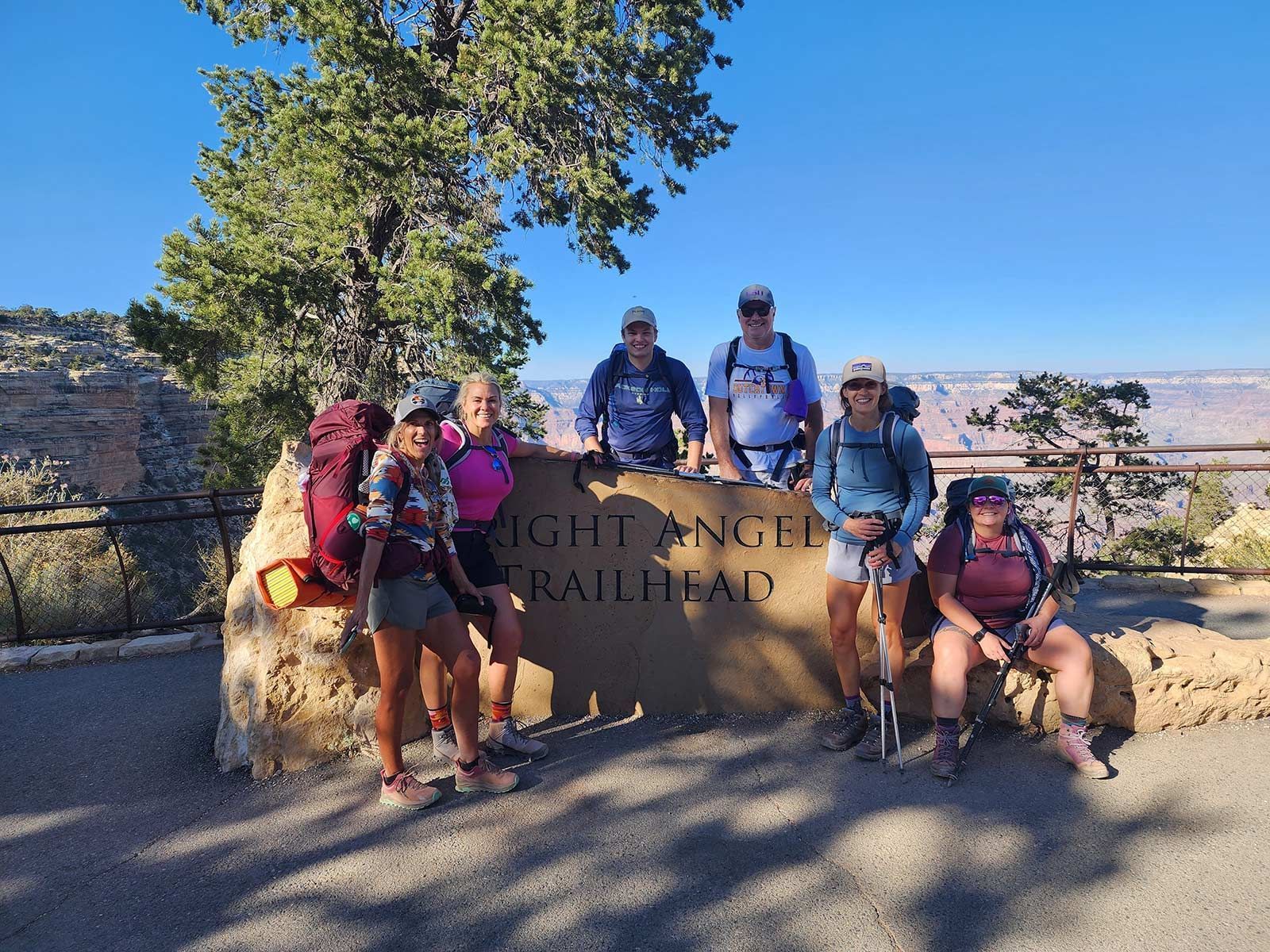
Proper preparation makes the difference between a memorable experience and a dangerous situation. The Grand Canyon's extreme environment leaves no room for improvisation. Pack these essential items before descending.
- Water: Minimum 2-3 liters for short hikes, 4+ liters for longer distances. Carry a water purification system for refills at creeks.
- Sun protection: High-SPF sunscreen (30+), broad-brimmed hat, and quality sunglasses
- Proper footwear: Broken-in hiking boots with excellent traction. Inner canyon trails are rocky and unforgiving.
- Electrolyte replacement: Sports drinks, salt tablets, or electrolyte powders to maintain mineral balance
- High-calorie snacks: Trail mix, energy bars, and fruits that replenish calories
- First aid kit: Blister treatment, pain relievers, antihistamines, and basic wound supplies
- Headlamp or flashlight: Essential for early-morning starts and unexpected late returns
- Rain gear: Afternoon thunderstorms occur frequently; pack a lightweight poncho
- Layered clothing: Temperature swings can exceed 30 degrees Fahrenheit between rim and canyon bottom
- Trekking poles: Reduce knee strain on the steep descent and provide stability on rocky sections
Many hikers underestimate the amount of water necessary. A common mistake involves thinking "I can refill at the resthouse," then discovering the resthouse is farther than expected. Always carry more water than you think necessary.
Bright Angel Trail with Kids
Families frequently hike the Bright Angel Trail, and children often surprise adults with their capabilities. The trail's gradual descent makes it more kid-friendly than steeper alternatives, but canyon hiking remains inherently challenging. Here's how to make it family-appropriate:
- Start with the 1.5-Mile Resthouse as a family's initial canyon experience
- Begin early morning hikes (6-7 AM) to avoid afternoon heat and return before children tire
- Plan frequent breaks every 15-20 minutes, allowing kids to rest and hydrate
- Carry extra snacks children burn calories quickly at elevation
- Set clear turnaround goals beforehand; don't let kids push beyond safe limits
- Make it educational: discuss the rock layers, geological features, and ecosystem changes
- Use hiking poles for children to reduce leg strain and boost confidence
- Bring entertainment for rest breaks: nature journals, photography challenges, or scavenger hunts
- Never push children to hike faster than their natural pace the canyon experience matters more than distance
Many families create lasting memories by making Bright Angel hiking an annual tradition. Children as young as 5-6 can successfully complete the 1.5 Mile Rest house hike with proper pacing and encouragement.
Guided Hiking on the Bright Angel Trail
Several outfitters offer professionally guided Bright Angel Trail hikes, eliminating navigation concerns and providing expert knowledge. Grand Canyon guided hiking tours range from day trips to multi-day backpacking adventures. These services prove invaluable for those uncomfortable hiking independently or seeking enhanced interpretive experiences.
- Day hikes: Professional guides lead groups on 1.5-Mile, 3-Mile, or Indian Garden hikes
- Multi-day trips: Overnight experiences to Bright Angel Campground include meals and camping logistics
- Expertise: Guides provide geological, historical, and ecological context inaccessible to independent hikers
- Safety: Guides monitor group members for heat exhaustion and physical distress
- Photography tours: Specialized guides position hikers for optimal sunrise, sunset, or light conditions
- Mule trips: Combine hiking and mule riding for reduced physical demands
Contact Grand Canyon guided hiking tours through the National Park Service concierge or authorized outfitters. Booking in advance (2-6 months) ensures availability during prime hiking seasons.
Rim-to-Rim: Connecting Bright Angel to the North Rim
Experienced backcountry hikers combine the Bright Angel Trail with the North Kaibab Trail to create an epic rim-to-rim trek covering 23 miles of canyon terrain. This multi-day adventure represents the Grand Canyon's ultimate hiking challenge, requiring permits, exceptional fitness, and thorough preparation.
- Total distance: Approximately 23 miles (South Rim to North Rim)
- Elevation change: 10,000+ feet total (descent and re-ascent)
- Typical duration: 2-3 days minimum for experienced hikers
- Water sources: Bright Angel Creek, Phantom Ranch, Bright Angel Campground
- Permits: Backcountry permits required through National Park Service lottery (highly competitive)
- Logistics: Must arrange transportation from North Rim back to South Rim (45-minute drive or mule shuttle)
- Best timing: Mid-May to mid-October only; winter conditions render North Rim inaccessible
Rim-to-rim hiking is not recommended for first-time canyon hikers. Most successful rim-to-rim hikers have completed multiple previous canyon trips and maintain peak fitness. The North Kaibab Trail's steep grade and exposed sections demand careful attention and route-finding skills.
Frequently Asked Questions
How long does it take to hike the Bright Angel Trail to the Colorado River?
Most hikers require 10-12 hours of continuous hiking to reach Bright Angel Campground at the river. However, the National Park Service recommends considering this a two-day trip, spending one night at the campground before returning.
The ascent from river to rim is particularly taxing and should never be rushed.
Is a Bright Angel Trail map necessary, or are directions clear?
While the main Bright Angel Trail is well-maintained and clearly marked, a paper trail map provides valuable context. Download the official National Park Service Bright Angel Trail map before your hike, or purchase a printed version at the visitor center.
Maps help you identify rock layers, understand distances remaining, and navigate potential confusion near reshouses.
Can I see the Bright Angel Trail on Google Maps?
Yes, Google Maps displays the Bright Angel Trail route. However, rely on official National Park Service resources for the most accurate trail information. Google Maps sometimes shows trail variations or outdated routes.
The National Park Service website offers downloadable PDFs with current trail conditions and restrictions.
What are the main causes of Bright Angel Trail deaths?
Heat exhaustion and heat stroke account for the majority of canyon hiking fatalities, especially during summer months.
Other common causes include dehydration, falls, medical emergencies in people with undiagnosed health conditions, and insufficient preparation. Starting hikes too late in the morning dramatically increases summer heat risk.
How difficult is the Bright Angel Trail compared to other Grand Canyon hikes?
The Bright Angel Trail is considered moderately difficult by Grand Canyon standards. It's easier than the South Kaibab Trail (which offers no shade or water) but more challenging than rim-level walks.
The Bright Angel difficulty rating increases significantly below Indian Garden where shade and water become scarce.
Can I hike the Bright Angel Trail in winter?
Yes, Bright Angel Trail winter hiking is possible but requires additional precautions. Snow and ice can accumulate on switchbacks, making footing treacherous. Winter daylight hours are limited, making early departure essential.
Many hikers find winter offers the pleasant advantage of cooler temperatures and fewer crowds compared to spring and fall seasons.
Plan Your Bright Angel Trail Adventure Today
The Bright Angel Trail represents one of North America's most iconic hiking experiences. Whether you're hiking 3 miles for a morning adventure or committing to a multi-day backpacking trip, the trail offers world-class canyon immersion. Start your planning with the information above, consult official National Park Service resources, and consider guided hiking options if you're new to canyon trekking.
Success on the Bright Angel Trail requires three elements: proper timing (spring or fall), adequate water (more than you think necessary), and realistic expectations. Respect the canyon's power, start conservatively with shorter turnaround points, and scale up your adventures as experience grows. Happy hiking!
Four Season Guides, 506 N Grant St suite o, Flagstaff, AZ 86004, United States
+19285251552
35.19653980, -111.62000560
Read More