Bears Ears National Monument Hiking: Grand Gulch Guide
Bears Ears National Monument hiking centers on the canyons of Cedar Mesa in southeastern Utah, where trails lead to Ancestral Puebloan cliff dwellings, granaries, and rock art. Grand Gulch offers the deepest experience, most canyon hikes require a BLM permit, spring and fall are the best seasons, and every site deserves a careful, respectful visit.
Key Takeaways
- Bears Ears National Monument in southeastern Utah protects one of the richest collections of Ancestral Puebloan cliff dwellings, granaries and rock art anywhere in North America.
- The hiking ranges from short trails to famous ruins to multi-day backcountry routes through Grand Gulch on Cedar Mesa.
- Many canyon hikes, including Grand Gulch and other Cedar Mesa canyons, require a BLM permit. Day and overnight permits are limited, so plan ahead.
- Visit with respect: never touch, lean on or enter the structures, never move or remove artifacts, and stay on the trail to protect fragile desert soil. These are sacred places to the region's Tribes.
- A licensed guide handles the permits and route-finding and brings the history to life, the difference between photographing a ruin and understanding it.
Walk into a quiet canyon in Bears Ears, round a bend, and there it is: a thousand-year-old stone dwelling tucked into an alcove high on the cliff, hand-shaped granaries beside it, faded handprints painted on the rock. Someone lived here, farmed here, raised children here, centuries before Europe knew this continent existed. Few places in America put you that close to the deep past.
This guide covers how to hike to those cliff dwellings the right way: where the trails lead, what permits you need, when to go, and, most importantly, how to visit these ancient places with the respect they deserve.
What and Where Is Bears Ears National Monument?
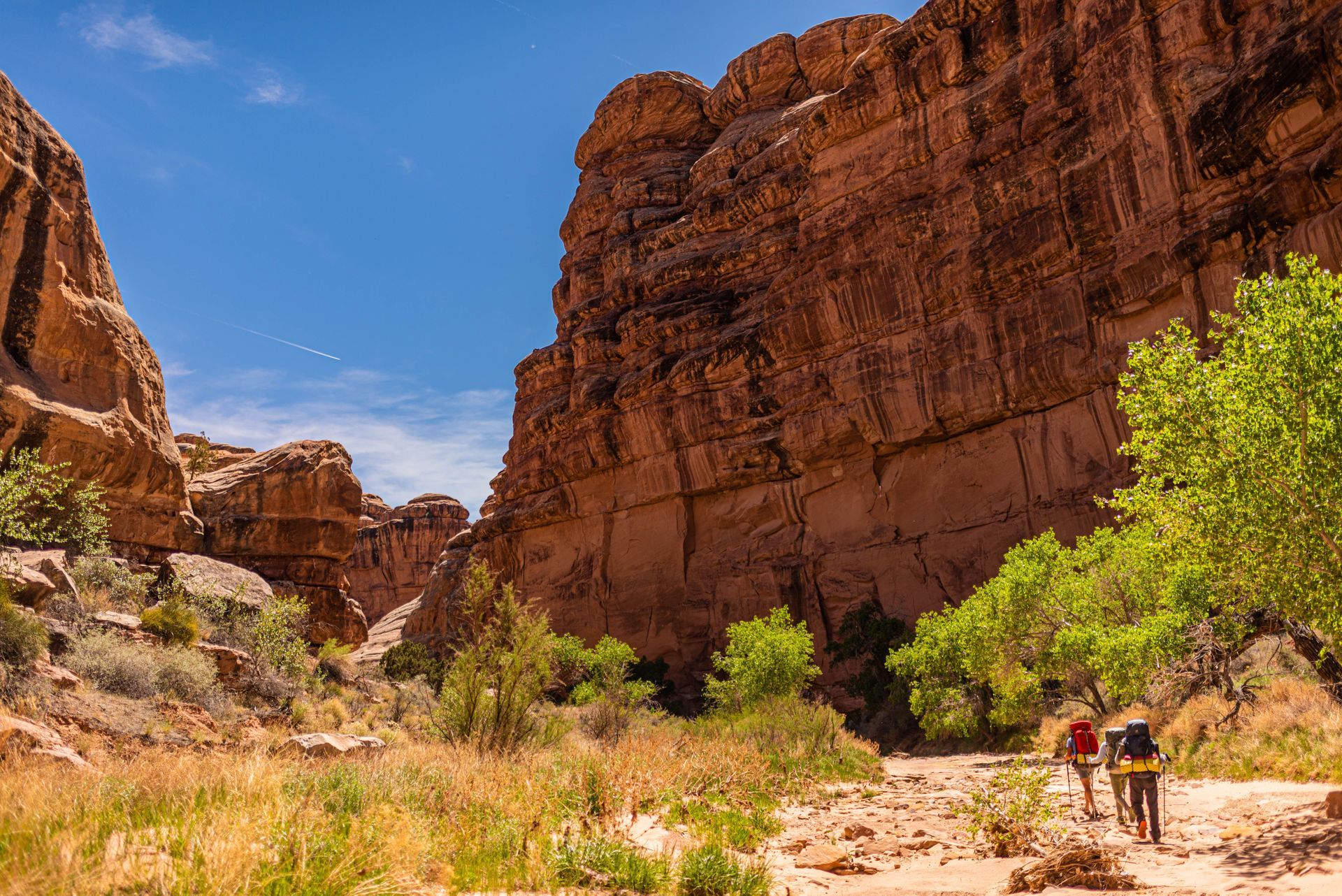
Bears Ears sits in the high desert of southeastern Utah, near the small towns of Blanding, Bluff and Monticello. The name comes from a pair of buttes that rise like a bear's ears on the horizon. At its heart is Cedar Mesa, a vast tableland cut by deep sandstone canyons, the most famous of which is Grand Gulch.
This is remote, rugged country: slickrock and juniper, big silence, and very little cell service. It is also a living cultural landscape, deeply significant to the Hopi, Navajo, Ute, Ute Mountain Ute and Zuni peoples, whose ancestors built and used the sites you will hike to. Coming here is a privilege; it asks for some care in return.
The Cliff Dwellings and Rock Art: A Quick History
The builders were the Ancestral Puebloans, sometimes called the Anasazi, who farmed and lived across the Four Corners for centuries and left this landscape around 700 years ago. What remains is remarkable: masonry dwellings sheltered in cliff alcoves, small stone granaries that stored corn and seeds, and rock art, both pictographs (painted) and petroglyphs (pecked), scattered through the canyons.
Cedar Mesa holds one of the densest concentrations of these sites in the Southwest. Hiking here is less like visiting a single monument and more like walking through an open-air museum that was never roped off, which is exactly why how you behave around the sites matters so much.
Bears Ears National Monument Hiking: Trails for Every Level
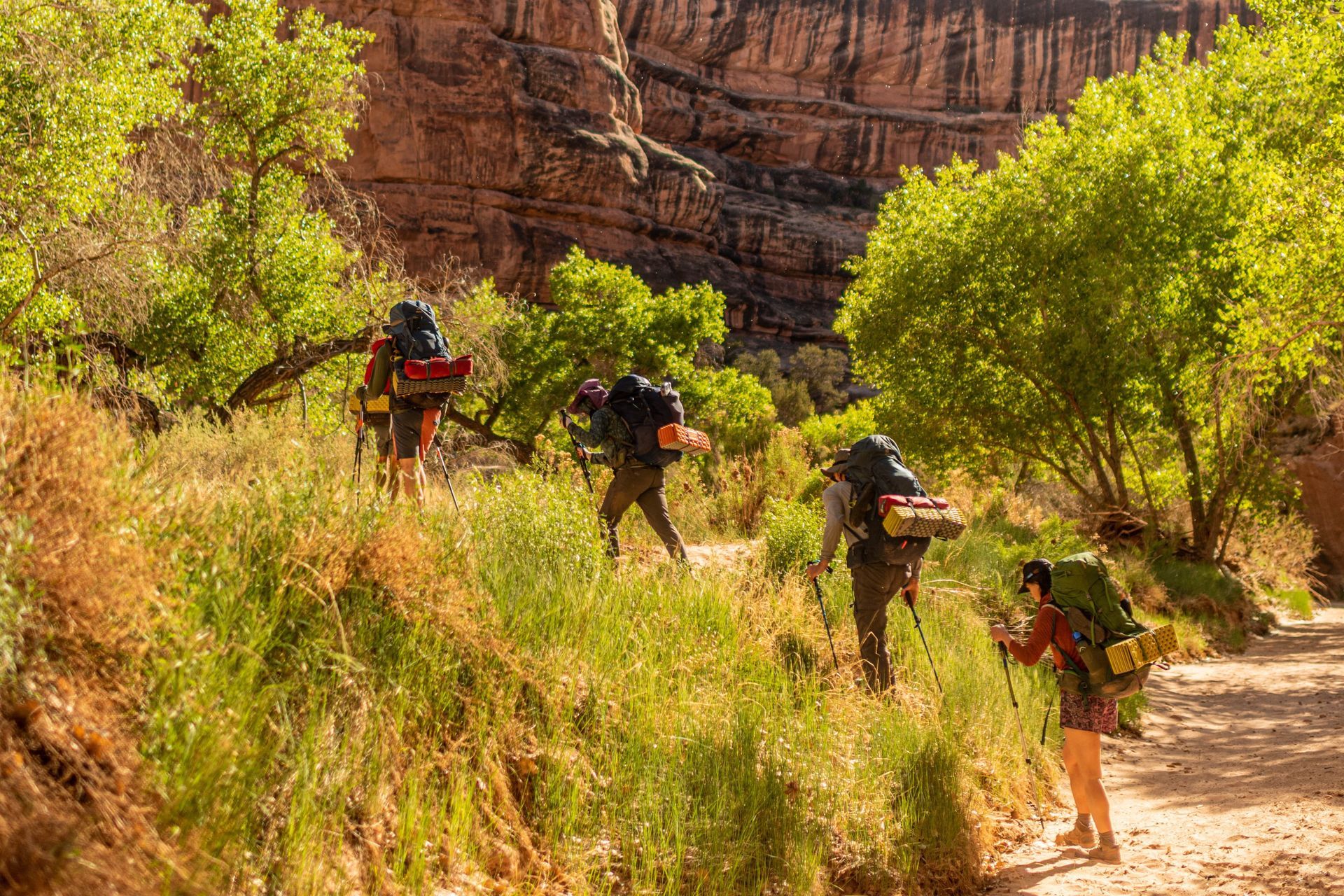
Bears Ears has trails for every level, from a short interpretive walk to a serious canyon trek. A few of the best-known:
- Butler Wash Overlook. A short, easy walk (about a mile round trip) to a viewpoint looking across the canyon at a cliff dwelling. A gentle introduction.
- House on Fire. A moderate canyon hike (roughly two to two and a half miles round trip) to a set of granaries beneath an alcove whose streaked sandstone glows like flames in the right light.
- The Citadel. A moderate mesa-top walk (roughly four to five miles round trip) out to a dramatic ruin perched on a narrow peninsula of rock.
- Kane Gulch into Grand Gulch. A longer, more demanding day hike that drops from the Kane Gulch trailhead to the upper reaches of Grand Gulch, where well-preserved ruins and rock art begin appearing on the canyon walls. It is the same trailhead where our own multi-day trips begin.
These are popular public trails across the monument; the deeper Grand Gulch backcountry, below, is a different kind of experience.
Going Deeper: Backpacking Grand Gulch
For travelers who want more than a roadside viewpoint, Grand Gulch is the heart of it. This long canyon system on Cedar Mesa holds one of the richest concentrations of cliff dwellings, granaries and rock art in the Southwest, and because it takes days to walk, it rewards you with something rare here and almost everywhere: solitude.
This is the country we guide. Our Bears Ears backpacking trip follows Grand Gulch from the Kane Gulch trailhead through what we think of as an outdoor museum of the Ancestral Puebloan world, stopping at sites along the way while a guide explains what you are looking at. You walk where people walked a thousand years ago, sleep under desert stars, and find the kind of quiet the better-known Utah canyons lost long ago. You will find it alongside the rest of our guided Utah hiking trips.
Permits and Regulations: Plan Ahead
The canyons of Cedar Mesa and Comb Ridge, including Grand Gulch, are managed by the Bureau of Land Management, and hiking them requires a permit. Day hikes in these canyons need a day-use pass, and overnight backpacking requires a permit issued in limited numbers, capped at 20 people per trailhead per day.
Permits are available through the BLM on Recreation.gov, reservable up to three months ahead, or in person at the Kane Gulch Ranger Station, which keeps limited spring and fall hours. Because the best seasons fill up, plan early, and check the BLM's Cedar Mesa permit page for current rules and fees before you go. One quiet advantage of a guided trip is that the permits, and the planning that goes with them, are handled for you.
Visiting the Ruins Respectfully (Please Read This)
This is the most important section on the page. The cliff dwellings have survived for centuries because the desert is dry and visitors have been careful. Keep it that way:
- Do not touch or lean on the walls. The oils on your hands and the weight of your body damage fragile, irreplaceable masonry.
- Do not enter or climb on the structures. Look from outside; never go in.
- Leave every artifact exactly where it lies. Potsherds, corncobs, tools, do not pick them up, pocket them, or arrange them for a photo. Removing artifacts is also illegal under federal law.
- Stay on the trail and on slickrock. The dark, crumbly ground is living cryptobiotic soil that takes decades to recover from a single footprint.
- Pack out everything, and keep your distance and your voice down at the sites.
Above all, remember these are not abandoned ruins to a great many people; they are ancestral homes, still sacred to the region's Tribes. Visit the way you would want your own ancestors' resting places treated.
Best Time to Hike Bears Ears
Spring (roughly April to May) and fall (roughly September to October) are the sweet spots: comfortable temperatures, stable weather, and the canyons at their best. Summer is hot and brings the risk of monsoon flash floods in the narrow canyons. Winter is cold and quiet, with the chance of snow and ice. Whenever you go, carry far more water than you think you need; this is dry country.
How to Get There
Bears Ears spreads across San Juan County in southeastern Utah, reached through gateway towns like Blanding, Bluff and Monticello. The drives in are long and scenic, often on dirt roads, and cell service is unreliable to nonexistent, so carry a paper map and download navigation before you go. Our own trips run out of Flagstaff, Arizona, and the drive itself, across the Painted Desert, past Monument Valley and up the Moqui Dugway, is part of the experience.
Guided or Self-Guided: Which Is Right for You?
For the short, well-marked trails to roadside ruins, many hikers do fine on their own with a permit and good preparation. The deeper backcountry is a different proposition. Navigating Grand Gulch, securing the limited permits, carrying enough water, reading the sites correctly and visiting them ethically all take experience. That is where a guide earns their place, and where the trip becomes about understanding what you are seeing instead of merely finding it.
Explore Grand Gulch with Four Season Guides
We have spent more than twenty-five years guiding people through the canyons of the Southwest, handling the logistics so our guests can focus on the experience. Our Bears Ears backpacking trip takes you deep into Grand Gulch, permits and route handled, with a licensed guide to bring the Ancestral Puebloan history to life and the kind of solitude you will not find on the busier trails. Ready to see this country for yourself? Explore the trip, or browse the rest of our guided Utah hiking trips to find your way into canyon country.
Frequently Asked Questions
Do you need a permit to hike in Bears Ears National Monument?
For the Cedar Mesa and Comb Ridge canyons, including Grand Gulch, yes. Day hikes need a day-use pass and overnight trips need a backpacking permit, limited to 20 people per trailhead per day through the BLM. Some roadside trails do not require one; check current rules with the BLM before you go.
What are the best hikes in Bears Ears?
Popular options include Butler Wash Overlook and House on Fire (short and family-friendly), The Citadel (a mesa-top ruin), and Kane Gulch into Grand Gulch (a longer canyon hike rich in ruins and rock art).
Can you visit the cliff dwellings in Bears Ears?
Yes, many are reachable by trail. View them up close, but never touch, lean on, enter or climb the structures, and never move or remove any artifact.
Is it legal to enter the ruins in Bears Ears?
Disturbing archaeological sites is illegal under federal law, and entering fragile structures damages them. Look, photograph from a respectful distance, and leave everything exactly as you found it.
Where is Bears Ears National Monument?
In southeastern Utah, near the towns of Blanding, Bluff and Monticello, centered on Cedar Mesa and the Grand Gulch canyon system.
When is the best time to hike Bears Ears?
Spring and fall are most comfortable. Summer is hot with monsoon flash-flood risk in the canyons; winter is cold and quiet.
How do I backpack Grand Gulch?
Secure a BLM permit (reservable up to three months ahead on Recreation.gov), start from the Kane Gulch area, and plan a remote, water-aware multi-day route, or join a guided trip that handles the permits and navigation for you.
Four Season Guides, 506 N Grant St suite o, Flagstaff, AZ 86004, United States
+19285251552
35.19653980, -111.62000560
Read More