Death Valley National Park Visitor Guide
More Than a Land of Extremes
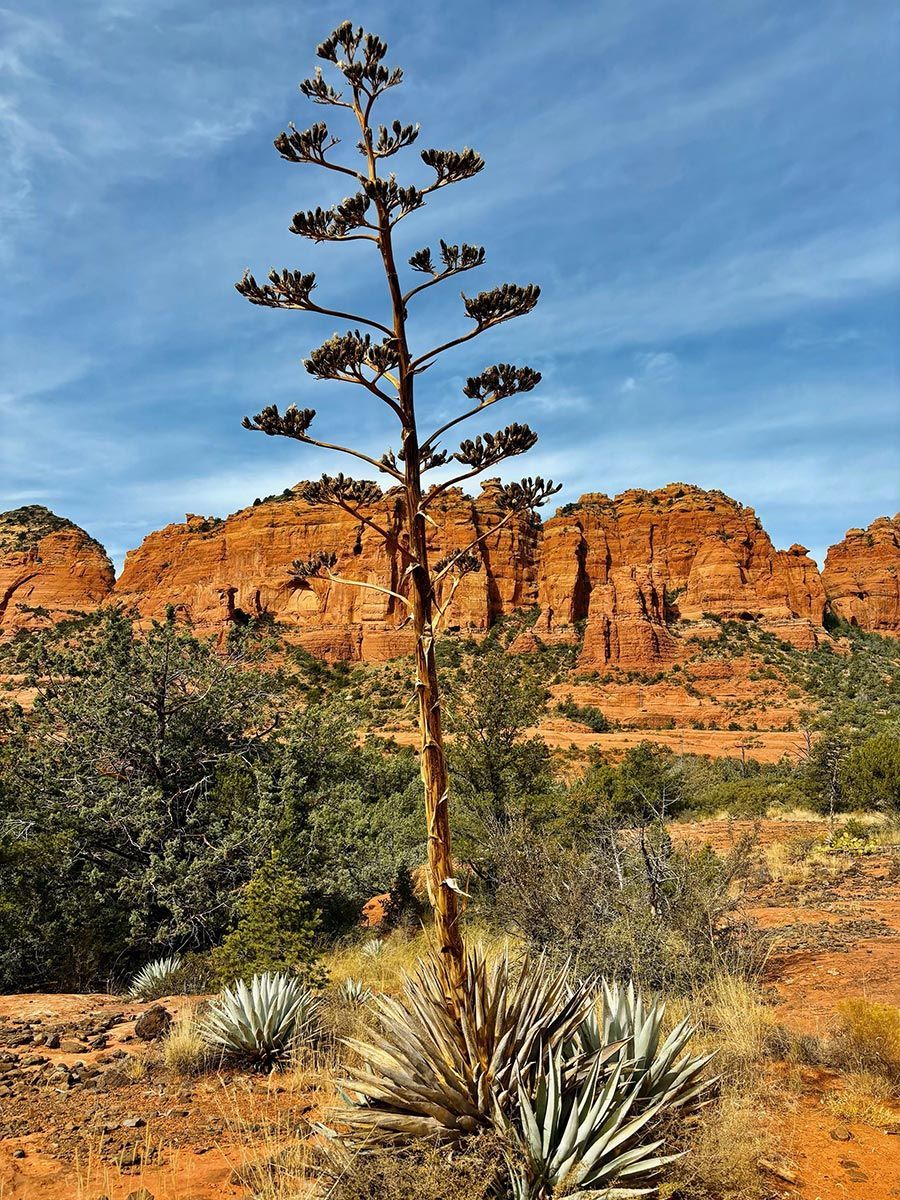
Awe-inspiring beauty is the norm in Death Valley. Colorful geometric rock formations rise from the desert floor. Slot canyons carved through marble twist and narrow before spilling into dry waterfalls. Unexpected surface water glistens throughout the park where springs push relentlessly through porous rock.
At sunset, the sky comes alive with bands of pink, orange, and gold as light fades behind the mountainous horizon. For those who linger into the night, the expansive sky reveals planets, constellations, and the luminous band of the Milky Way.
There is also a surprising amount of solitude to be found here. It doesn’t take much to step off the beaten path and feel completely alone in a vast and striking landscape. Unlike many national parks where visitors compete for space at popular viewpoints, Death Valley’s scale allows for quiet exploration.
Adventure exists in many forms here. Slot canyons, sand dunes, volcanic craters, mountain ascents, hidden oases, and endemic species can all be experienced in just a few days. For those looking to build a short but meaningful trip, a well-planned three-day itinerary offers an excellent introduction.
For those who prefer a more supported experience, our Four Season Guides team also offers
guided hiking trips in Death Valley that take care of the logistics while allowing you to fully experience the landscape.
Death Valley Geology
Death Valley is also one of the most geologically dynamic landscapes in North America.
It is the only national park in the contiguous United States with more than 11,000 feet of vertical relief within its boundaries. Visitors can stand at Badwater Basin, the lowest point in the Western Hemisphere at –282 feet, and look up toward Telescope Peak rising to 11,049 feet above sea level.
The park lies within the Basin and Range Province, a landscape shaped by the stretching and faulting of the Earth’s crust. Mountain ranges rise along fault lines while adjacent valleys drop, creating the dramatic topography seen throughout the region.
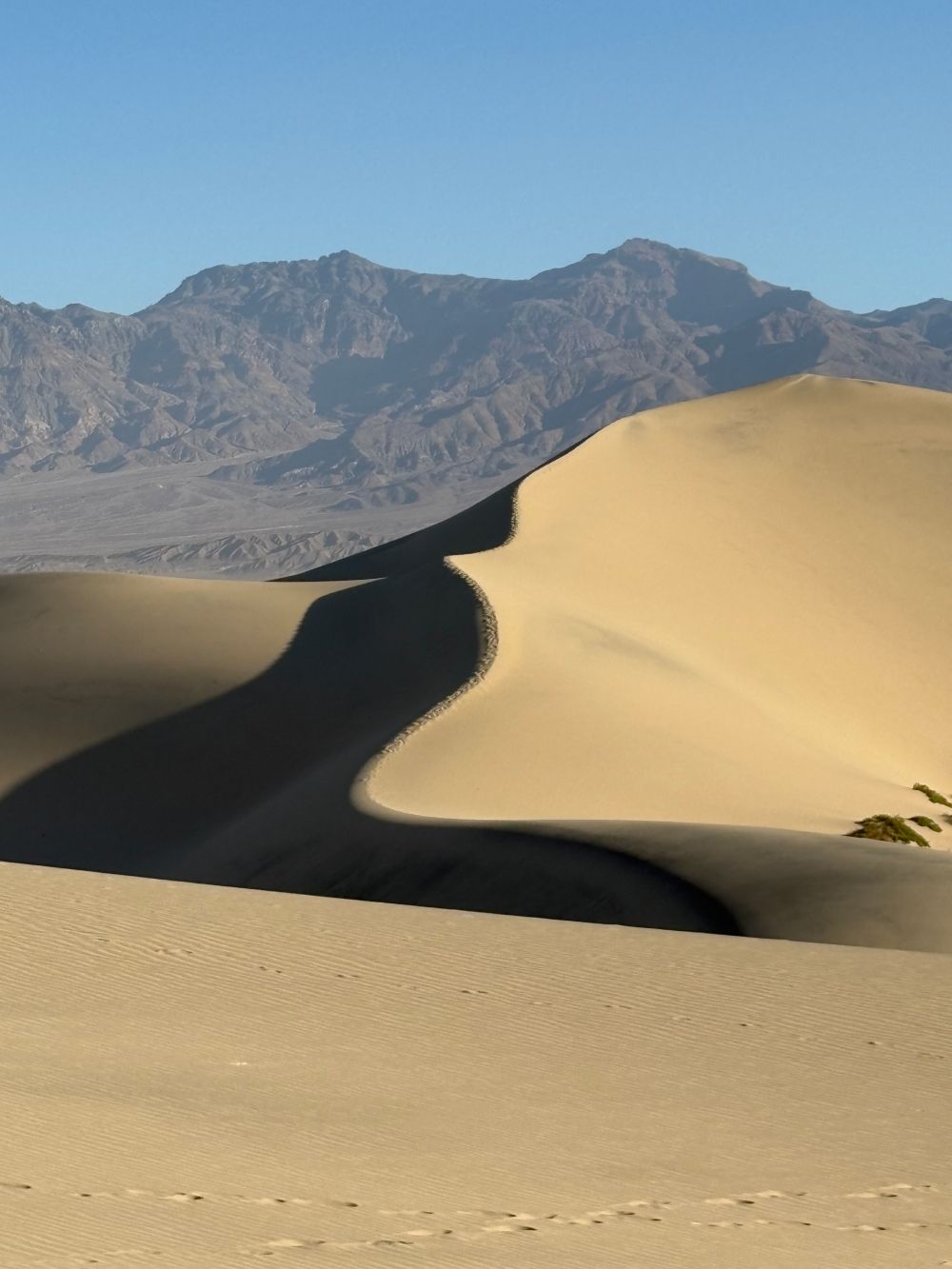
Sedimentary layers found in places like Badwater Basin and Mesquite Flat Sand Dunes date back over 500 million years and include remnants of ancient seabeds, sand dunes, and freshwater basins.
Even older metamorphic rocks — including gneiss and schist found in the Black Mountains — date back nearly 1.8 billion years. Mosaic Canyon showcases polished marble formed from metamorphosed limestone, while Corkscrew Peak reveals striking bands of folded and uplifted quartzite.
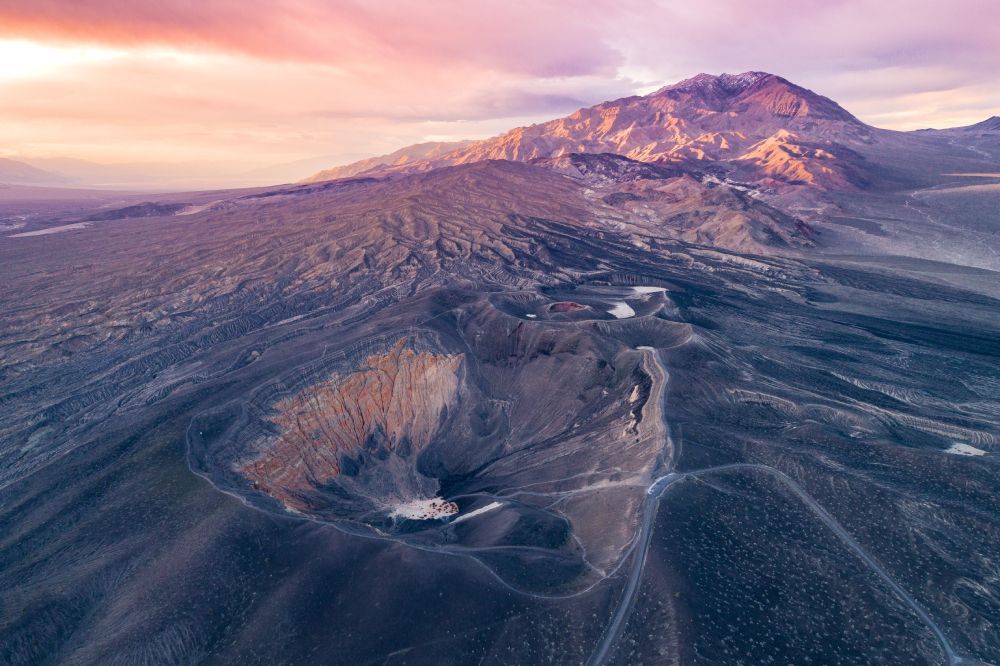
Volcanic activity has also shaped the park. As recently as 800–2,000 years ago, eruptions created a field of explosion craters (maars) in the northern part of the park. Ubehebe Crater is the most prominent example, offering visitors a chance to experience this relatively recent geologic activity up close.
Human History and the Making of Death Valley
Long before it became a national park, this region was home to Indigenous peoples who lived and traveled throughout the basin and range landscape for thousands of years. Today, the Timbisha-Shoshone Tribe maintains deep cultural and historical ties to the area.
In the mid-1800s, prospectors moved west in search of gold and silver. Many faced extreme conditions, and not all survived. While precious metals were found in the region, borax ultimately became the most significant mineral resource.
Harmony Borax Works, established in 1883, helped bring national attention to the area and played a key role in shaping Death Valley’s early identity.
The park was designated a National Monument in 1933 and later became a National Park in 1994. Today, over 90% of Death Valley is protected wilderness, preserving opportunities for primitive, non-mechanized recreation.
Where to Stay: Furnace Creek and Stovepipe Wells
Despite its remote feel, Death Valley offers several comfortable lodging options.
Furnace Creek serves as the primary hub of the park. The Ranch offers a range of amenities including a spring-fed pool, dining options, a general store, bike rentals, and access to the Borax Museum. The Ice Cream Parlor and Last Kind Words Saloon are popular stops after a day of exploring.
Just up the road, The Oasis provides a more upscale experience, with a restaurant and outdoor seating that overlooks the valley — an especially memorable place to watch the sunset.
Stovepipe Wells, located about 30 minutes away, offers additional lodging, camping, fuel, and dining options. It’s a convenient base for exploring areas like Mosaic Canyon and the Mesquite Flat Sand Dunes.
If you're considering staying in the park but want help coordinating lodging, meals, and daily hikes, you can explore our guided lodge-based trips in Death Valley through Four Season Guides.
A 3-Day Death Valley Itinerary
Day 1
Highlights: Ash Meadows Wildlife Refuge, Zabriskie Point, Golden Canyon, Gower Gulch, Red Cathedral, Furnace Creek, Mesquite Flat Sand Dunes
Drive into the park (approximately 2 hours from Las Vegas). If time allows, stop at Ash Meadows Wildlife Refuge to see the blue-silver pupfish swimming in saline-rich thermal waters.
Continue to Zabriskie Point for sweeping views of the badlands and Manly Beacon. For a more immersive experience, hike into Golden Canyon or Gower Gulch, with options to extend toward Red Cathedral. These routes can be done as out-and-back hikes or combined into loop variations.
Stop at the Furnace Creek Visitor Center to learn more about the park’s geology, ecology, and history. Ranger programs are worth attending if your timing allows.
Set up camp at Furnace Creek, Sunset Campground, or Texas Springs Campground. Texas Springs offers a slightly quieter setting tucked into the hills.
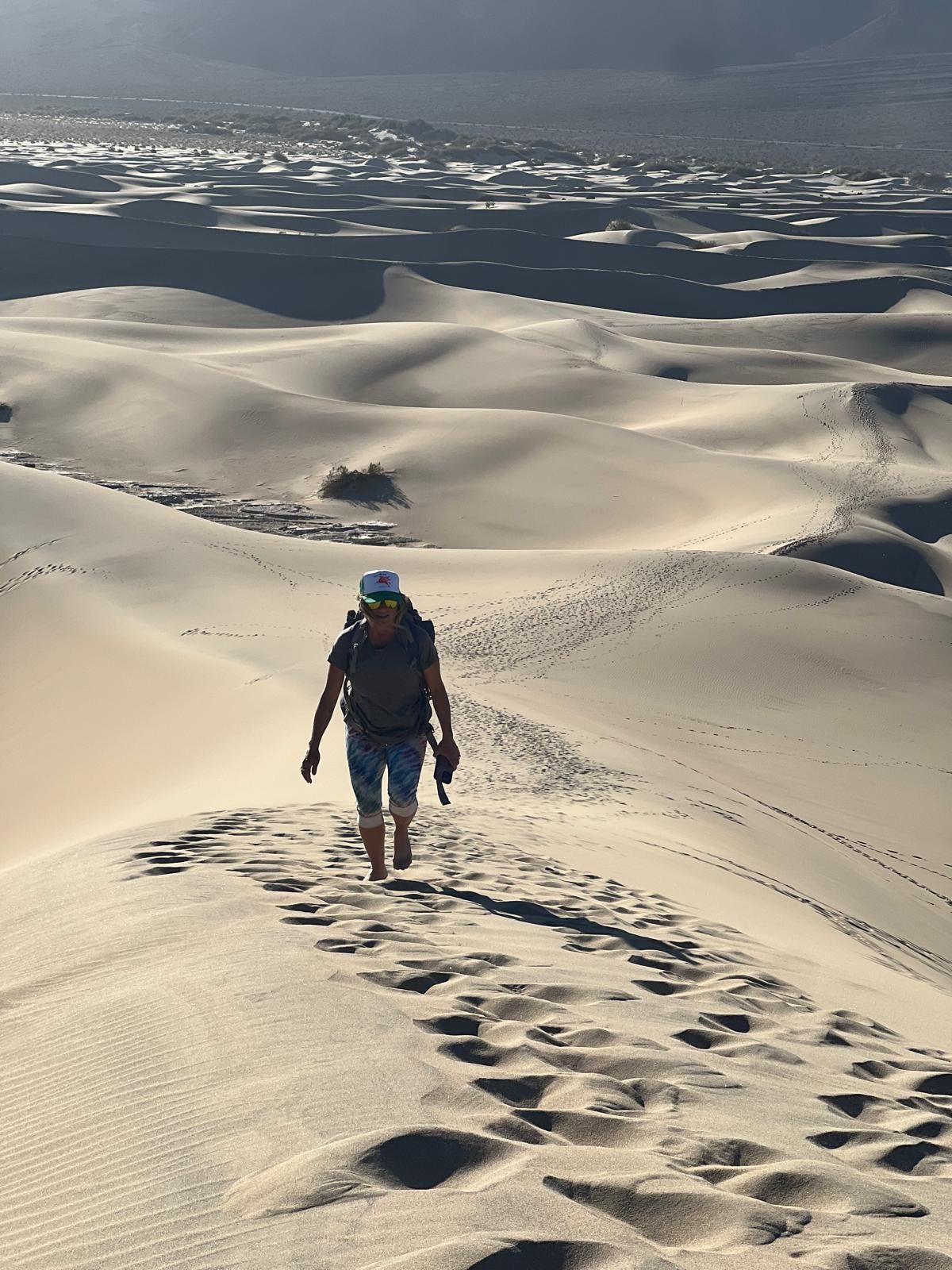
In the late afternoon, head to Mesquite Flat Sand Dunes. Bring a chair or simply take your time walking out into the dunes — the changing light across the sand is one of the most memorable experiences in the park.
On your way back, a stop at The Ranch Ice Cream Parlor is optional, but well-earned!
Death Valley Ecology
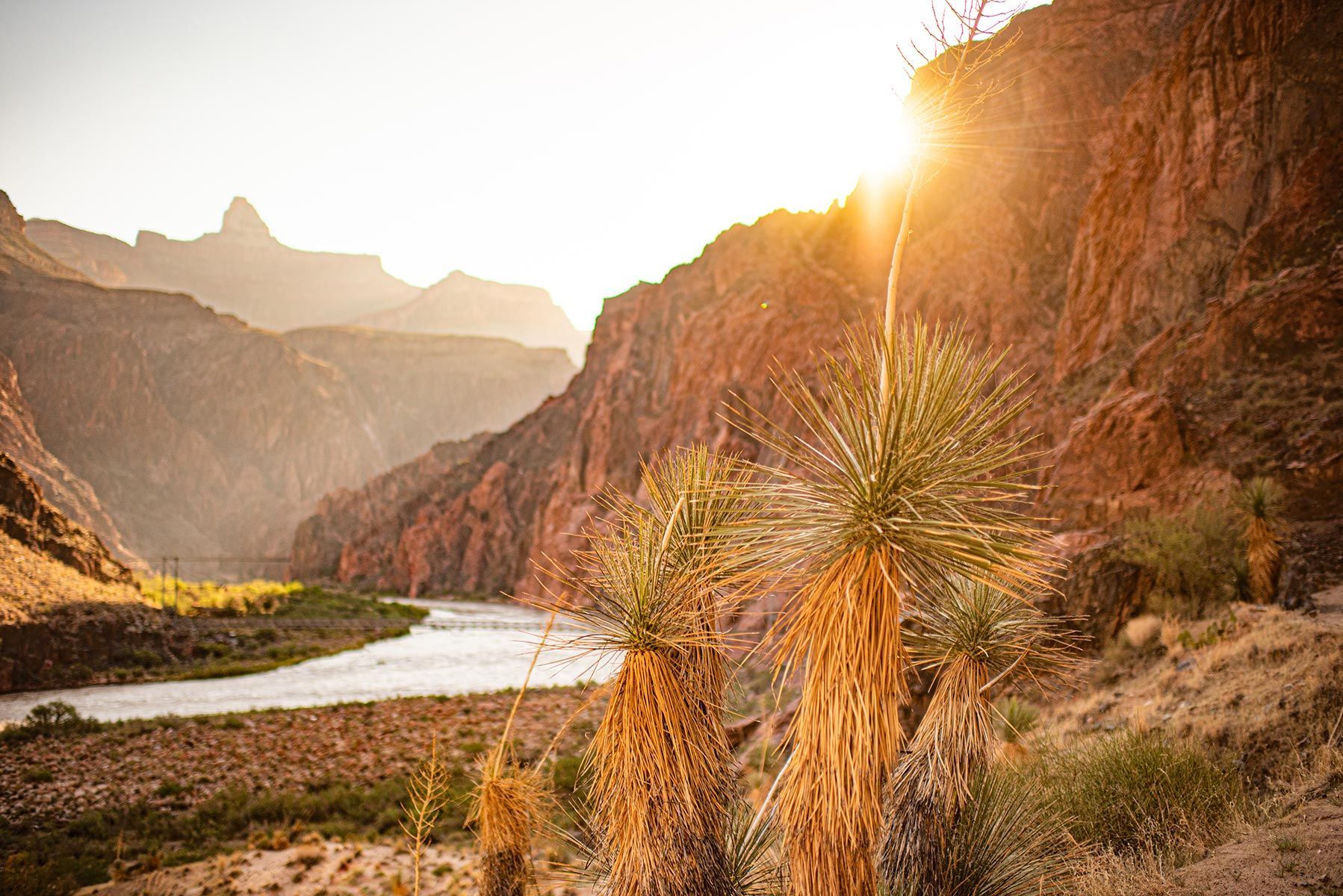
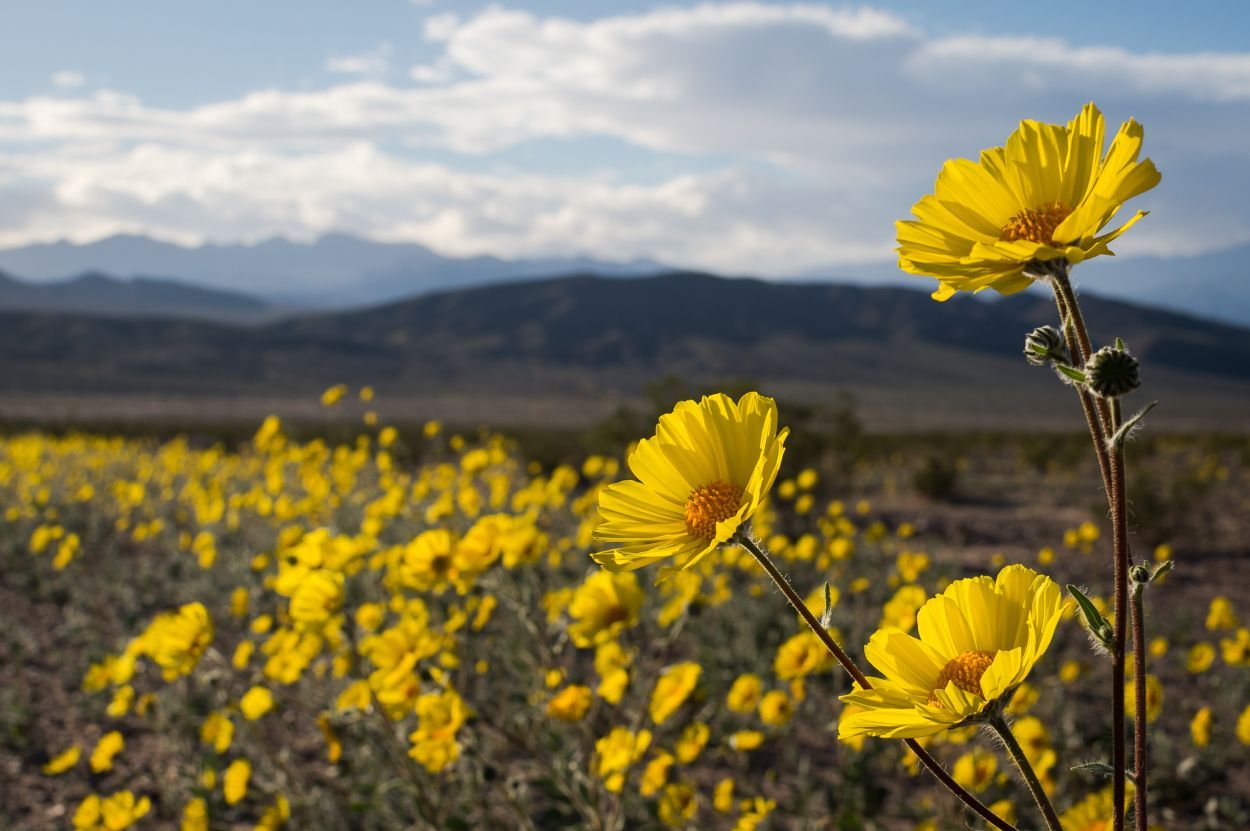
Death Valley National Park often conjures images of dry, desolate, hotter-than-hot landscapes — endless sand dunes and barren badlands. Less recognized, however, are the thriving oases scattered throughout the park and the geologic diversity that supports them.
Death Valley is home to more than 20 endemic animal species — species found nowhere else in the world. Notable examples include several pupfish species (Devils Hole, Cottonball Marsh, Saratoga Spring, and Salt Creek), as well as the Panamint alligator lizard and Panamint kangaroo rat, named after the Koso (Panamint) people who once inhabited the region.
Just outside the park, Ash Meadows National Wildlife Refuge offers an even more striking example of desert biodiversity, with an additional 26 endemic species. For travelers coming from Las Vegas, it’s a worthwhile and often overlooked stop.
Despite being one of the harshest environments on Earth, Death Valley supports a wide range of life — from desert bighorn sheep and coyotes to kit foxes, bobcats, mountain lions, and a variety of reptiles, birds, and amphibians. It is a place where life persists in subtle but remarkable ways.
Day 2
Highlights: Ubehebe Crater, Mosaic Canyon, Corkscrew Peak, Death Valley Buttes, Fall Canyon, Stovepipe Wells, Salt Creek.
Drive approximately one hour to Ubehebe Crater. The distance can feel significant, but the experience is worth it. Walk the rim and, if time allows, continue toward Little Hebe.
From there, choose a hike based on your energy level and interests. Mosaic Canyon offers a more moderate option with polished marble walls, while Corkscrew Peak and Death Valley Buttes provide more strenuous challenges. Fall Canyon offers a more technical route with some route-finding required.
All of these hikes are within a short drive of Stovepipe Wells, making it a natural place to stop for a meal at Badwater Saloon.
On your return, stop at Salt Creek and walk the boardwalk for a chance to see pupfish in their natural habitat — a small but memorable experience.
End the day back at camp and take time to enjoy the night sky. Death Valley offers some of the darkest skies in the country.
Day 3
Highlights: Badwater Basin, Devil’s Golf Course, Natural Bridge, Desolation Canyon, Artist’s Drive, Borax Museum.
Drive along Badwater Road to Badwater Basin and walk out onto the salt flats. The scale becomes more apparent the farther you walk from the parking area.
Stop at Devil’s Golf Course to see jagged salt formations stretching in all directions.
Continue to Natural Bridge for a short hike to a striking rock formation shaped by water and gravity.
If you’re looking for another hike, Desolation Canyon offers a quieter option with fewer visitors. Otherwise, continue along Artist’s Drive, an 8-mile scenic loop with multiple pullouts.
Finish your visit with a stop at the Borax Museum near Furnace Creek.
Death Valley Visitor Guide: Quick Reference
If you prefer to see everything laid out clearly, here’s a simplified planning snapshot:
Furnace Creek
Lodging: Ranch • Oasis
Camping: Furnace Creek • Sunset • Texas Springs
Food: Inn Dining Room • Last Kind Words Saloon • Ice Cream Parlor • Sidewinder Café
Services: Gas (incl. diesel) • General Store • Visitor Center • Borax Museum
Stovepipe Wells
Lodging • Campground
Food: Badwater Saloon • Toll Road Restaurant
Services: Gas (no diesel) • General Store • Ranger Station
Must-See Stops
Zabriskie Point • Badwater Basin • Devil’s Golf Course • Artist’s Drive • Mesquite Flat Dunes • Salt Creek
Hikes (easiest → most challenging)
Natural Bridge → Ubehebe Crater → Golden Canyon → Mosaic Canyon → Desolation Canyon → Corkscrew Peak → Death Valley Buttes → Fall Canyon
Final Thoughts
Death Valley rewards those who slow down.
It’s easy to move quickly from one viewpoint to the next, but the real experience comes from stepping into the landscape — walking into a canyon, sitting in the dunes at sunset, or simply taking the time to notice the details.
This is a place that reveals itself gradually, and often quietly, to those willing to pay attention.
About the Author
Lead Guide,
Four Season Guides
Bri Boertman is a professional backcountry guide with over 20 years of experience leading trips throughout the American Southwest. She has spent extensive time exploring and guiding in Death Valley National Park and is known for her deep knowledge of desert environments and ability to help guests experience these landscapes in a meaningful, personal way.
Four Season Guides, 506 N Grant St suite o, Flagstaff, AZ 86004, United States
+19285251552
35.19653980, -111.62000560
Read More