Grand Canyon in March: Your Complete Visitor's Guide
Visiting the Grand Canyon in March: The Complete Guide
March is one of the best-kept secrets for visiting the Grand Canyon. The summer crowds haven't arrived yet, the weather is mild enough for comfortable hiking, and the South Rim is fully open with all trails and viewpoints accessible. Whether you're planning a quick weekend stop or a multi-day backpacking adventure, this guide covers everything you need to know to make the most of your March trip.
As a team that has been guiding hikers through the Grand Canyon since 1999, we've seen March deliver some of the most memorable canyon experiences of any month. Here's what to expect.
Is March a Good Time to Visit the Grand Canyon?
Short answer: absolutely. March sits in a sweet spot between the frigid winter months and the packed summer season. You get the best of both worlds — manageable weather and far fewer people. It's one of the reasons we run some of our most popular guided Grand Canyon hiking tours during this window.
Pros of a March Visit
March brings a handful of advantages that make it one of the smartest times to visit. The temperatures are comfortable for hiking, especially if you're heading below the rim where the inner canyon warms up to the low 70s. Crowds are noticeably thinner than the May-through-September rush, which means shorter lines at viewpoints, easier parking, and a more peaceful experience overall.
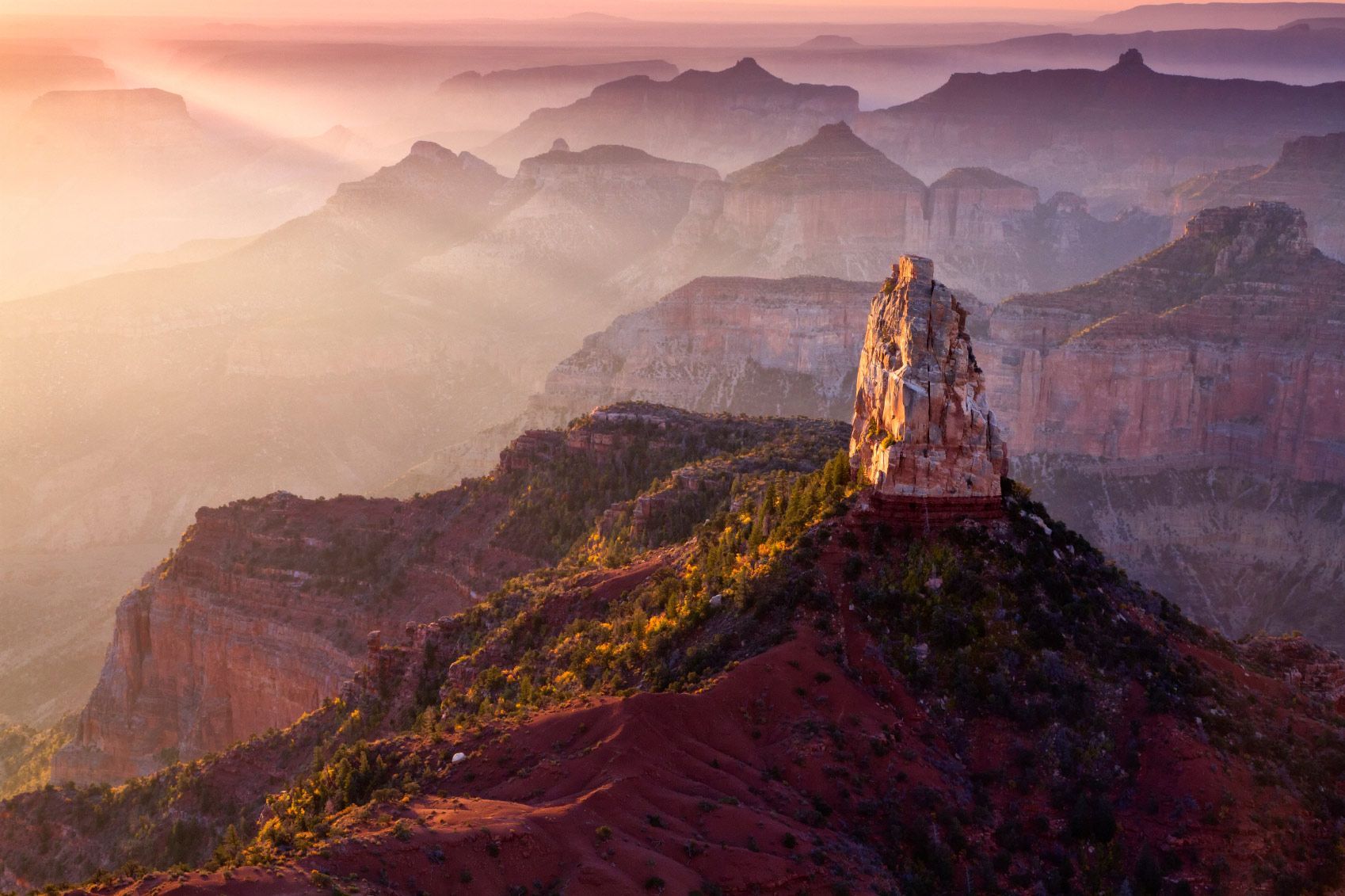
Lodging prices are also lower than peak season, and you'll have a much easier time scoring reservations at popular spots like El Tovar or Bright Angel Lodge. Plus, March light is phenomenal for photography — the low sun angle casts deep shadows into the canyon that make for stunning shots at sunrise and sunset.
Cons of a March Visit
The biggest downside is unpredictable weather. Early March can still feel like winter on the South Rim, with overnight lows dropping to the mid-20s and occasional snowstorms that can dump several inches on the rim. You'll need to be prepared for everything from sunshine to sleet in the same day.
The
North Rim is completely closed during March, so you're limited to the South Rim for all your exploring. And if your trip falls during mid-to-late March, spring break crowds start to pick up — though they're still nothing compared to summer.
March vs. April: Which Is Better?
Both months have their merits. March is cooler, quieter (especially early March), and typically cheaper for lodging. April warms up a bit, with South Rim highs averaging in the upper 50s to low 60s, and you get longer daylight hours. However, April also brings more visitors and higher prices. If you prefer solitude and don't mind packing a few extra layers, March has the edge. For a deeper look at seasonal conditions, see our guide on when is the best time to hike Grand Canyon.
Grand Canyon Weather in March: What to Expect
Weather is probably the number one question people have about a March trip, and for good reason — conditions can vary wildly depending on where you are in the canyon.
South Rim: 51°F High / 25°F Low
The South Rim sits at about 7,000 feet elevation, which means March weather here is more late-winter than early-spring. Daytime highs average around 51°F with overnight lows near 25°F. You'll get roughly 1.38 inches of precipitation over the month, which can fall as rain or snow.
Mornings and evenings are cold — you'll want a warm jacket for sunrise viewing. But by midday, especially in late March, the sun can make things feel quite pleasant if you're hiking in a sheltered section of trail.
Inner Canyon: 71°F High / 48°F Low (Phantom Ranch)
This is where it gets interesting. Phantom Ranch, down at the canyon floor at 2,460 feet elevation, is a completely different climate from the rim. Thanks to a temperature lapse rate of about 5.5°F per 1,000 feet of descent, the inner canyon is roughly 20–25 degrees warmer than the rim in March.
Highs near 71°F and lows around 48°F make the bottom of the canyon ideal for comfortable hiking and even a dip in Bright Angel Creek (for the brave). If you're planning a rim-to-river hike, you'll shed layers as you descend and pile them back on for the climb out. Our
Phantom Ranch hiking tour is a great way to experience these below-rim conditions with expert guidance and comfortable lodging at the bottom.
Does It Snow at the Grand Canyon in March?
Yes, snow is absolutely possible on the South Rim in March, particularly in the first two weeks. Storms can dump several inches on the rim overnight, creating a surreal landscape of red rock frosted in white. These snow events are usually short-lived — the sun melts most accumulation within a day or two.
That said, snow and ice on trails can make hiking hazardous. If you're visiting in early March, bring microspikes or at least check trail conditions at the Backcountry Information Center before heading below the rim. On all of our guided trips, we provide traction devices as part of your gear so you're always prepared.
March Weather by Week
Breaking March into thirds gives you a better planning picture:
Early March (1st–10th): Feels most like winter. Expect highs in the mid-to-upper 40s on the rim, possible snow, and very few crowds. Great for solitude seekers.- Mid-March (11th–20th): The transition begins. Highs reach the low 50s more consistently, trail ice begins to melt, and spring break travelers start trickling in.
- Late March (21st–31st): The warmest stretch, with highs approaching the mid-50s on the rim and pushing toward the mid-70s in the inner canyon. Spring break crowds are at their March peak.
What's Open and Closed in March
South Rim: Open Year-Round
Good news — the South Rim operates year-round, so everything you'd want to see and do is available in March. That includes all major viewpoints (Mather Point, Yavapai, Hopi Point, Desert View), the Bright Angel and South Kaibab trailheads, the Grand Canyon Visitor Center, Yavapai Geology Museum, and most dining options and gift shops.
The Hermit Road (also called West Rim Drive) opens to private vehicles from December through February, but typically switches to shuttle-only service by mid-March as visitor numbers increase. Check the NPS website for exact dates before you go.
North Rim: Closed Until Mid-May
The North Rim sits at 8,297 feet — over 1,000 feet higher than the South Rim — and gets buried under heavy snowfall each winter. The road in (Highway 67) and all North Rim facilities stay closed from mid-October through mid-May. So if you're visiting in March, the North Rim simply isn't an option. For a detailed comparison of both rims, see our South Rim vs. North Rim guide.
Shuttle Bus & Road Conditions
The free Village Route and Kaibab Rim Route shuttles typically run year-round, though schedules can be reduced in winter. The Hermits Rest Route shuttle usually resumes in March as the road closes to private vehicles.
Desert View Drive (Highway 64 East) is open year-round but can occasionally close temporarily during snowstorms. Always check current road conditions at the park's official website before driving, especially if you're arriving from Flagstaff via Highway 64.
Best Things to Do at the Grand Canyon in March
Wondering what the best things to do at the Grand Canyon in March actually are? You've got plenty of options — from serious Grand Canyon hiking below the rim to mellow viewpoint strolls and scenic flights.
Day Hiking: Best Trails for March
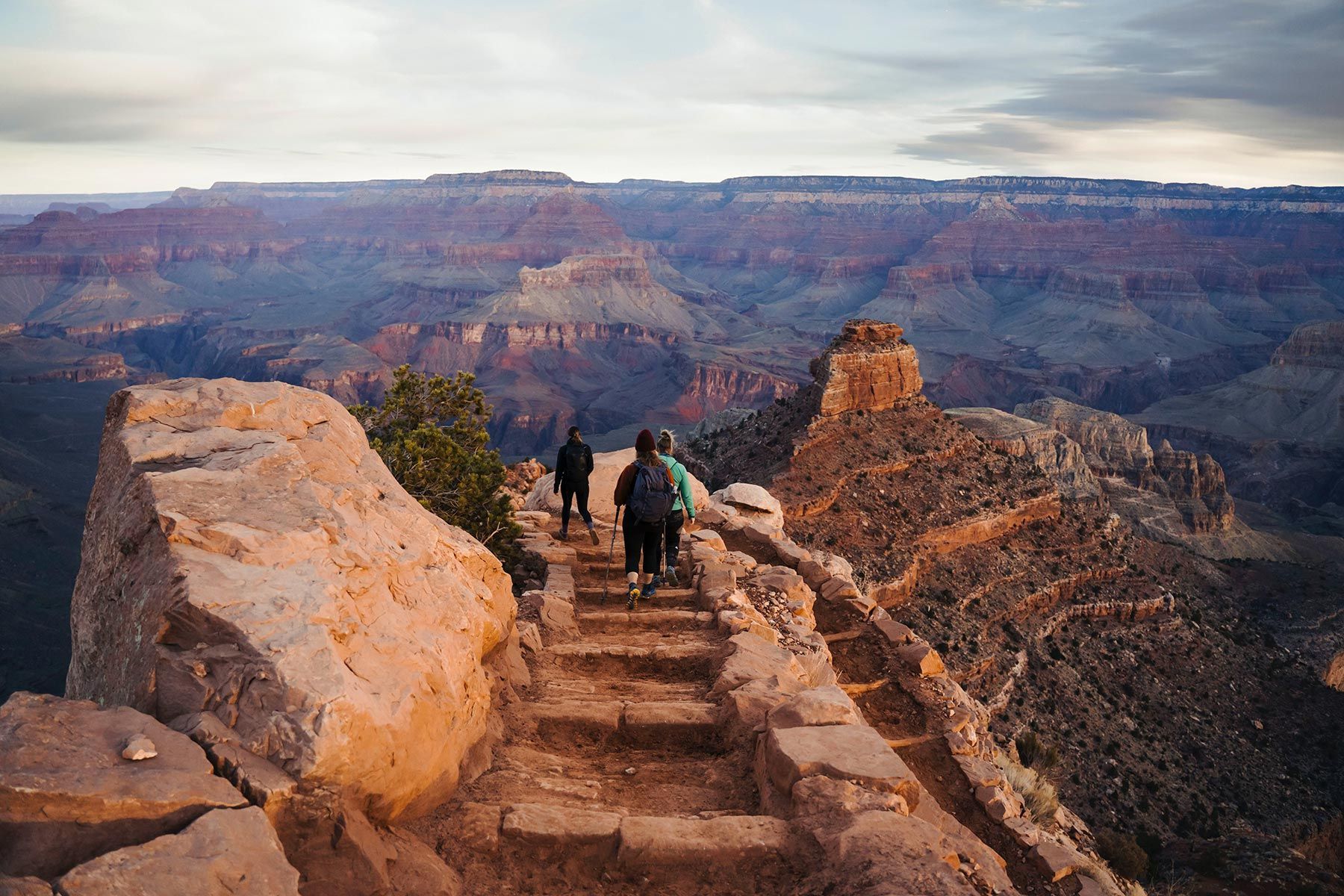
March is prime time for day hiking, especially in the inner canyon where temperatures are perfect. The Bright Angel Trail (down to Havasupai Gardens, 9.2 miles round trip) and the South Kaibab Trail (down to Cedar Ridge, 3 miles round trip, or Skeleton Point, 6 miles round trip) are the two most popular options.
For something easier, the
Rim Trail stretches 13 miles along the South Rim and is paved for much of its length — perfect for a casual stroll between viewpoints. It's accessible for strollers and wheelchairs in several sections and offers nonstop canyon views.
If you'd like expert guidance on any of these trails, our
Grand Canyon day hikes include a professional guide, picnic lunch, snacks, and any gear you might need.
Backpacking & Overnight Treks
If you've snagged a backcountry permit, March is excellent for multi-day trips below the rim. The corridor trails (Bright Angel, South Kaibab, North Kaibab to Phantom Ranch) are the most popular routes. March temperatures at Phantom Ranch are comfortable for camping without the brutal heat that makes summer inner-canyon trips dangerous.
Keep in mind that backcountry permits are competitive — the NPS releases them on a rolling basis, and popular dates sell out quickly. If navigating the permit process sounds overwhelming, our
guided backpacking trips handle all permits, logistics, gear, and meals so you can focus on the experience. Popular March options include the
Canyon Classic and the
Hermit Loop.
Scenic Viewpoints & Photography
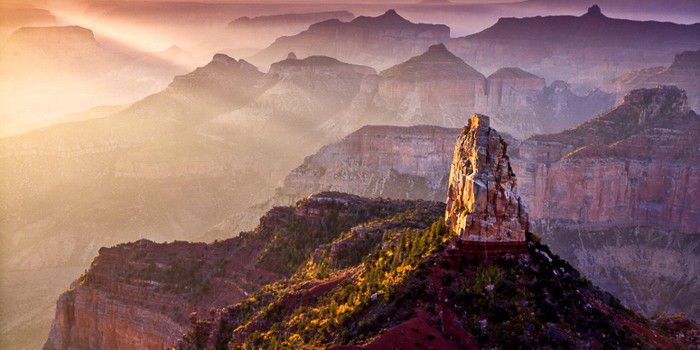
March light is a photographer's dream. The lower sun angle creates dramatic shadows and contrast in the canyon, especially during the golden hours at sunrise and sunset. Top spots include Mather Point (the classic first stop), Hopi Point (often considered the best sunset viewpoint), and Lipan Point on Desert View Drive for its sweeping eastern views.
If you get a rare dusting of snow on the rim, drop everything and start shooting — a snow-capped Grand Canyon is one of the most breathtaking sights in the park, and it doesn't last long.
Ranger Programs & Educational Activities
The NPS runs ranger-led programs year-round at the South Rim, including geology talks, history walks, and evening programs at the Shrine of the Ages auditorium. March schedules are lighter than summer, but you'll still find several programs daily. Check the park bulletin board or NPS app for the current schedule.
Helicopter Tours & Scenic Flights
If you want a bird's-eye view, helicopter and small-plane tours operate year-round from the Grand Canyon Airport in Tusayan (just outside the South Entrance). March is a great time for flights because the air is typically clear and crisp. Tours range from quick 25-minute flyovers to longer trips that include a canyon-floor landing.
Key Takeaways
- South Rim temperatures average 51°F high / 25°F low with about 1.38 inches of precipitation in March.
- The Inner Canyon (Phantom Ranch) is significantly warmer, reaching 71°F high / 48°F low — ideal for below-rim hiking.
- The South Rim is fully open year-round. The North Rim stays closed from mid-October through mid-May.
- Spring break crowds pick up in the second half of March, so early March is your best window for solitude.
- Layers are non-negotiable — expect 20–30°F temperature swings between the rim and the canyon floor.
- Book lodging early — in-park rooms (El Tovar, Bright Angel Lodge) sell out months in advance for March.
Hiking the Grand Canyon in March: Trail Guide
Bright Angel Trail
This is the park's most popular trail for good reason. It's well-maintained, has water stations (though they may not be turned on until later in spring — check before you go), and offers two great turnaround points: the 1.5-Mile Resthouse and 3-Mile Resthouse. The full trail descends 4,380 feet over 9.5 miles to the Colorado River and Phantom Ranch.
In March, expect icy or muddy conditions on the upper switchbacks in the morning, especially in the first half of the month. The trail gets progressively warmer and drier as you descend.
South Kaibab Trail
Steeper and more exposed than Bright Angel, the South Kaibab Trail rewards you with unobstructed panoramic views the entire way down. The hike to Cedar Ridge (1.5 miles one way) is one of the best short hikes in the park, and Skeleton Point (3 miles one way) gives you a view straight down to the Colorado River.
There is no water on this trail, so bring plenty. The exposed ridgeline can be windy and cold in March mornings but warms up significantly by midday.
Rim Trail (Easy & Accessible)
For visitors who prefer to stay on top, the Rim Trail is the way to go. This mostly paved path runs 13 miles between the South Kaibab Trailhead and Hermits Rest, passing through Grand Canyon Village and dozens of viewpoints along the way. It's flat, easy, and gives you canyon views the entire length.
You don't have to walk the whole thing — hop on and off the free shuttle at any viewpoint and walk as much or as little as you want.
Trail Conditions & Safety: Microspikes Recommended
Early March trail conditions on the upper sections of Bright Angel and South Kaibab can include ice, packed snow, and mud. Microspikes (lightweight traction devices that strap onto your hiking boots) are strongly recommended and can be rented at the Grand Canyon Village general store if you don't own a pair. On all Four Season Guides trips, we provide traction devices as part of your included gear.
Always start your hike with more water and food than you think you'll need. The park's number one rule: the hike back up always takes longer and is harder than the hike down. For tips on getting in shape for a below-rim hike, check out our
Grand Canyon training plan.
Permits & Backcountry Reservations
Day hiking below the rim doesn't require a permit. Overnight stays in the backcountry do. The NPS backcountry permit system opens on a rolling basis — you can apply up to four months in advance for your desired start date. Phantom Ranch, the only below-rim lodging, books out even further ahead, so plan early if you want a bed (and a famous steak dinner) at the bottom.
Grand Canyon Spring Break: Crowds & Planning Tips
When Does Spring Break Hit the Grand Canyon?
Spring break at the Grand Canyon typically ramps up in the second half of March and peaks during the last week of March and first two weeks of April. The exact timing depends on school calendars, but mid-to-late March is when you'll start noticing more families, larger tour groups, and fuller parking lots.
How to Avoid the Worst Crowds
If your schedule is flexible, visit in the first 10 days of March for the quietest experience. You can also beat daily crowds by arriving at trailheads early — starting a hike by 7 a.m. means you'll have the trail largely to yourself for the first couple of hours.
Weekdays are noticeably quieter than weekends. And if you're willing to drive out to Desert View on the East Rim (about 25 miles from Grand Canyon Village), you'll find far fewer people and equally stunning viewpoints. Another option: our guides know the less-trafficked trails and hidden viewpoints that most visitors never find. A guided day hike can turn a crowded spring break week into a peaceful canyon experience.
Booking Windows for Lodging & Tours
In-park lodging fills up fast for March dates. Here's a general timeline:
El Tovar & Bright Angel Lodge: Book 6–12 months ahead
Maswik Lodge & Yavapai Lodge: Book 3–6 months ahead
Phantom Ranch (lottery): Apply 15 months in advance
Guided hiking tours: Reserve your trip as early as possible — spring dates are among our most popular
What to Wear & Pack for a March Visit
Layering System: 20–30°F Swings Between Rim & Canyon
March at the Grand Canyon demands layers. You'll start the morning on the rim in the 20s or 30s, and if you hike below the rim, you could be in short sleeves by the time you're in the inner canyon. Here's the system that works:
- Base layer: Moisture-wicking long-sleeve top and leggings (avoid cotton — it stays wet and gets cold fast)
- Mid layer: Insulating fleece or lightweight down jacket
- Outer layer: Waterproof, windproof shell (for surprise rain, snow, or wind on exposed ridges)
- Legs: Hiking pants or convertible pants with zip-off legs
- Feet: Sturdy, broken-in hiking boots with wool socks. Microspikes if visiting early March.
For a more detailed breakdown, check out our
Grand Canyon packing list.
Essential Gear Checklist
Here's what to bring beyond the basics:
- Sunscreen and sunglasses (UV is intense at 7,000 feet)
- Wide-brim hat or beanie (depending on conditions)
- Headlamp (if you're starting a hike before dawn or staying for sunset)
- Trekking poles (highly recommended for steep descents on South Kaibab)
- At least 2–3 liters of water per person per day hike
- High-calorie snacks (trail mix, energy bars, jerky)
- First aid kit with blister care supplies
- Camera and extra batteries (cold temps drain batteries faster)
Where to Stay Near the Grand Canyon in March
In-Park Lodging (South Rim)
Staying inside the park puts you steps away from the rim and trailheads. The main options are:
- El Tovar Hotel — the historic, upscale option right on the rim. Dining room serves excellent meals. Book way ahead.
- Bright Angel Lodge — charming, rustic cabins with rim-side views. More affordable than El Tovar.
- Maswik Lodge — the budget-friendly pick with modern rooms set back from the rim in the ponderosa pines.
- Yavapai Lodge — the largest in-park option, with two building types at different price points.
Gateway Towns: Tusayan, Williams, Flagstaff
If in-park lodging is sold out (or out of budget), the gateway towns offer plenty of alternatives:
- Tusayan (1 mile from South Entrance): Most convenient for park access. Hotels, restaurants, and the IMAX theater are all within walking distance.
- Williams (60 miles south): A Route 66 town with affordable motels, great BBQ, and the Grand Canyon Railway that takes you right into the park.
- Flagstaff (80 miles southeast): A full-service city with breweries, restaurants, and outdoor shops. It's also where Four Season Guides is headquartered — great if you're combining the Grand Canyon with other Northern Arizona stops like Sedona or Monument Valley.
Camping: Mather Campground
Mather Campground is the main South Rim campground with 327 sites. It's open year-round, but March nights are cold — expect overnight lows in the 20s. Bring a sleeping bag rated to at least 15°F and a sleeping pad with good insulation from the ground.
Reservations can be made up to six months in advance through Recreation.gov and are highly recommended for March dates, especially spring break weeks. For a camping experience with all the logistics handled, our
Grand Canyon basecamp tours include comfortable campsites, all meals, and expert-guided hikes.
How to Get to the Grand Canyon
Driving from Phoenix, Las Vegas & Flagstaff
The Grand Canyon's South Rim is accessible by car from all the major regional hubs:
- From Phoenix: 230 miles, about 3.5–4 hours via I-17 North to Highway 64
- From Las Vegas: 280 miles, about 4.5 hours via US-93 South to I-40 East to Highway 64
- From Flagstaff: 80 miles, about 1.5 hours via Highway 180/64
Gas up before you arrive — there's only one gas station inside the park (at Desert View, on the east side), and Tusayan has limited options.
Shuttle Services & Public Transit
If you'd rather not drive, the Grand Canyon Railway from Williams is a scenic, car-free way to get to the park. The train runs daily year-round and takes about 2 hours and 15 minutes each way.
Groome Transportation (formerly Arizona Shuttle) runs daily shuttles from Flagstaff to the Grand Canyon South Rim. It's a convenient option if you're flying into Flagstaff's small airport.
Once you're in the park, the free NPS shuttle system connects the Visitor Center, lodges, trailheads, and viewpoints, so you can easily explore without moving your car.
Frequently Asked Questions
Is March a good time to visit the Grand Canyon?
Yes — March is one of the best months for a visit. You get mild hiking temperatures (51°F on the South Rim, up to 71°F in the inner canyon), smaller crowds than summer, and lower lodging prices. The only trade-off is unpredictable weather, particularly in early March when snow is still possible on the rim.
What is the weather like at the Grand Canyon in March?
It depends on where you are. The South Rim averages 51°F high and 25°F low with about 1.38 inches of precipitation. Down at Phantom Ranch in the inner canyon, highs reach 71°F and lows stay around 48°F. The North Rim is closed and buried in snow.
Does it snow at the Grand Canyon in March?
It can, especially in the first half of March. Snowstorms can deposit several inches on the South Rim, though accumulation usually melts within a day or two. Snow makes for incredible photography but can create icy trail conditions — pack microspikes if you plan to hike.
Which part of the Grand Canyon is open in March?
The South Rim is fully open year-round, including all viewpoints, trails, the Visitor Center, and most lodging and dining. The North Rim is closed from mid-October through mid-May due to heavy snowfall at its 8,297-foot elevation.
What should I wear to the Grand Canyon in March?
Dress in layers for 20–30°F temperature swings between the rim and the canyon floor. Start with a moisture-wicking base layer, add an insulating mid layer (fleece or down), and top it with a waterproof shell. Sturdy hiking boots and wool socks are a must. The temperature drops roughly 5.5°F for every 1,000 feet of elevation change, so you'll warm up as you hike down and cool off quickly on the ascent. For a full gear rundown, see our packing list.
What is the cheapest month to visit the Grand Canyon?
January and February typically offer the lowest prices for lodging and tours. March is slightly more expensive than deep winter but still well below summer peak rates. For the best value, aim for early March before spring break pricing kicks in.
How many days do you need at the Grand Canyon?
Two to three days is ideal. That gives you time for a day hike below the rim, visits to the major viewpoints, and both a sunrise and sunset experience. If you're backpacking to Phantom Ranch (down at 2,460 feet), plan for at least three days to allow a full day at the bottom. Our three-day Grand Canyon itinerary is a great starting point for planning.
How much daylight is there at the Grand Canyon in March?
You'll get about 11.5 hours of daylight in early March, extending to roughly 12.5 hours by month's end. That's plenty of time for a full day hike below the rim and back. Sunrise is around 6:30 a.m. and sunset around 6:15 p.m. by late March (Arizona does not observe Daylight Saving Time).
Four Season Guides, 506 N Grant St suite o, Flagstaff, AZ 86004, United States
+19285251552
35.19653980, -111.62000560
Read More