Rainbow Mountain Peru: Altitude, Hike & What to Expect
Rainbow Mountain, Peru, also called Vinicunca, is a striped Andean ridge two to three hours southeast of Cusco, with a viewpoint at roughly 16,500 feet (5,030 m). The hike itself is short; the altitude is the real challenge. Acclimatize for a few days first, start early, and visit in the April to October dry season for the clearest colors.
Key Takeaways
- Rainbow Mountain (Vinicunca) is a striped Andean ridge near Cusco, banded in red, gold, turquoise and lavender by layers of minerals laid down over millions of years.
- The hike is short, but the altitude is not. At roughly 16,500 feet (5,030 m), the viewpoint sits higher than any peak in the lower 48 states, and the thin air, not the distance, is what humbles most people.
- The single biggest thing you can do to enjoy it is acclimatize first: spend a few days hiking high around Cusco and the Sacred Valley before you stand on that ridge.
- The dry season, roughly April through October, brings the clearest skies and the firmest trail.
- Most visitors rush it as a pre-dawn day trip from Cusco. Reaching it already acclimatized, in a small group, and pairing it with the quieter Red Valley next door is a far better day.
Rainbow Mountain looks invented. The first time you see a photo, the stripes read like someone ran a paintbrush across the Andes. Then you find out it is real, it is reachable on foot, and it has quietly become one of the most photographed places in Peru.
This guide is the honest version: what Vinicunca actually is, why it is colored the way it is, how high it sits and why that matters more than anything, and how to hike it so you spend the day awestruck instead of gasping. We guide Rainbow Mountain on our Peru hiking trips, as one day of the Machu Picchu Lodge-Based Trek, so this is the advice we give our own guests.
What and Where Is Rainbow Mountain (Vinicunca)?
Vinicunca, also called the Mountain of Seven Colors, is a high ridge in the Peruvian Andes southeast of Cusco, on the shoulder of the Ausangate massif, one of the region's great glaciated peaks. "Rainbow Mountain" is the name that travels; Vinicunca is what it is called here.
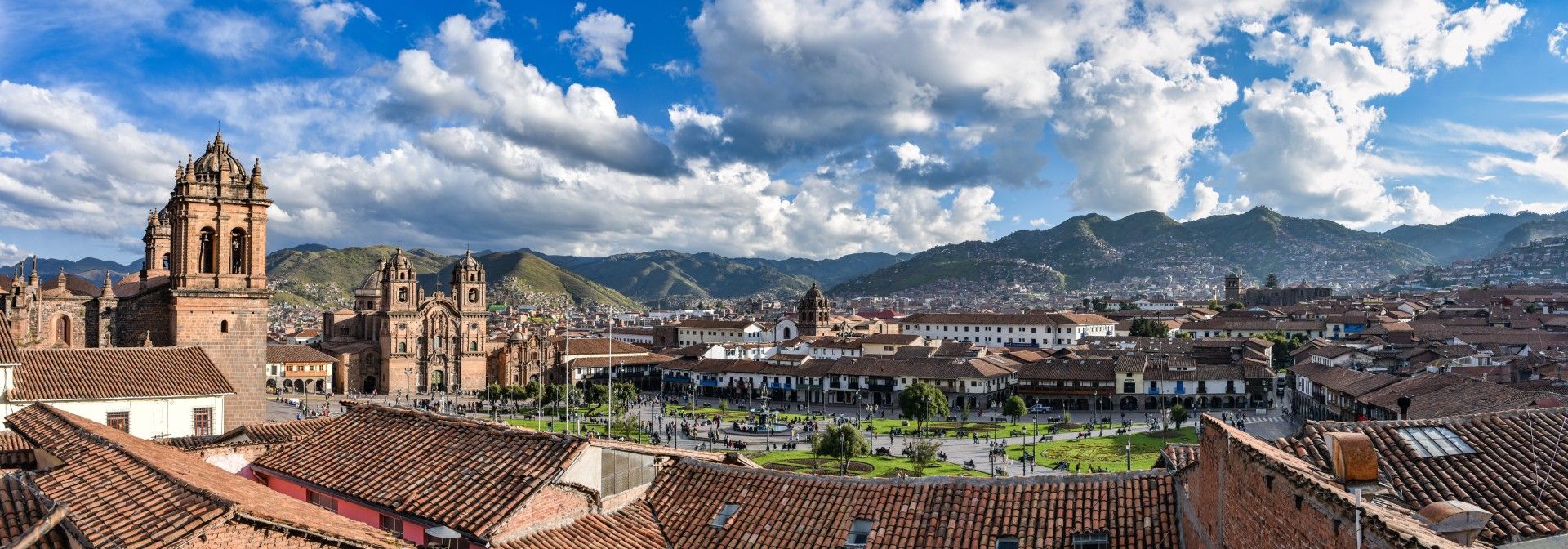
Getting there means leaving the city behind. The trailhead is a drive of two to three hours from Cusco through villages, high pasture and grazing alpacas, climbing the whole way until the road runs out and the walking begins. By the time you start hiking, you are already far above the elevation of almost anything back home, which is the part the photos never warn you about.
Why Is Rainbow Mountain So Colorful?
The colors are geology, not a filter. The ridge is built from layers of sediment laid down over millions of years, each rich in a different mineral, then tilted upright and worn open by erosion so the bands show on the surface. Iron-rich minerals paint the rusty reds and golds; other minerals add the greens, turquoise and lavender. The effect is strongest in dry, even light and softens when clouds roll over or fresh snow dusts the top.
For most of its history those colors stayed hidden under ice and snow. The glacier caps that long covered the ridge melted out around 2013, the painted slopes emerged, and by the mid-2010s Vinicunca had gone from unknown to bucket-list. It is a young famous place with a very old face.
How High Is Rainbow Mountain? Altitude, and Why It Matters Most
Here is the number that should shape your whole plan: the Rainbow Mountain viewpoint sits at about 16,500 feet (5,030 m) . Even the trailhead at Phulawasipata starts near 15,150 feet, so you are doing all of your walking higher than the summit of any mountain in the lower 48 states.
At that elevation there is roughly half the oxygen you are used to at sea level. A short, gentle slope that you would not think twice about at home becomes a stop-and-breathe effort. Headaches, breathlessness and a thumping heart are common, and they have very little to do with how fit you are. Altitude is the real difficulty of Rainbow Mountain, and respecting it is the difference between a great day and a miserable one.
The good news: altitude is manageable when you give your body time to adjust. Which brings us to the most important section on this page.
Acclimatize First: The Right Way to Hike Rainbow Mountain
Most Rainbow Mountain trips are sold as a single long day from Cusco: a 3 or 4 a.m. pickup, a few hours in the dark in a van, a hard hike at extreme altitude, and a long drive back. People do it, and plenty of them spend the morning fighting a headache instead of enjoying one of the strangest landscapes on earth.
There is a better way, and it is simple: be acclimatized before you go. Spend a few days first in Cusco, which already sits around 11,000 feet, and in the Sacred Valley, walking, exploring ruins, and letting your body build the extra red blood cells that make thin air bearable. Hydrate hard, take the first days slow, and treat the altitude as something to prepare for, not power through.
This is exactly how we structure it. On our Machu Picchu Lodge-Based Trek, Rainbow Mountain comes on the sixth day, after you have explored Cusco and the Sacred Valley, hiked the Short Inca Trail, and toured Machu Picchu itself, so by the time you reach 16,500 feet your body is ready for it. You sleep in comfortable lodges, your guides watch how you are doing, and you set out for the ridge already adjusted to the height. It is the same mountain everyone photographs, on a day you can actually savor.
If you would rather understand altitude before you commit, our guide to preparing for high-altitude hikes covers the basics of how your body adapts.
How Hard Is the Rainbow Mountain Hike?
Take the altitude out of it and this is a short hike. On the route we hike, the full day covers about 5.4 miles, climbing from the trailhead near 15,150 feet to the viewpoint around 16,500, then continuing into the Red Valley next door. The path is clear and climbs steadily rather than steeply, and most people are at the top within a couple of hours.
Put the altitude back in and "short" stops meaning "easy." The climb is a patient one: slow your pace, breathe deliberately, and stop when you need to. Local horsemen offer rides up much of the route for travelers who want them, which can turn an out-of-reach day into a doable one. Reaching the ridge under your own steam, lungs working, the colors finally in front of you, is a genuinely earned view.
What to expect underfoot and overhead: a well-trodden trail, fast-changing mountain weather, strong sun at altitude even when the air is cold, and crowds at the main viewpoint by late morning. Which is the next thing worth planning around.
Best Time to Visit Rainbow Mountain, Peru
The prime window is the dry season, roughly April through October , when you get the clearest skies, the firmest trail and the best chance of seeing the colors at full strength. The wettest months center on December through February, bringing mud, low cloud that can hide the ridge entirely, and the real possibility of snow covering the very stripes you came to see.
Whatever the month, mornings are your friend. Skies tend to be clearest early, afternoon clouds build over the high Andes, and getting there ahead of the midday tour crowds means quieter photos and a calmer summit.
Rainbow Mountain, Red Valley and Palcoyo: Which One?
Vinicunca is the famous one, and on a busy day it earns its reputation for crowds. Two things help.
The first is right next door. Just over the ridge from the main viewpoint lies the Red Valley , a sweep of deep crimson hills that most day-trippers never walk to because they turn around at the photo and head back to the van. It is quieter, wilder, and to many people the more memorable half of the day. Our trek includes the Red Valley alongside Vinicunca, so you see both.
The second is an alternative mountain. Palcoyo , a separate set of striped ridges in the same region, is often described as a mellower alternative, a good option for travelers who want the colors without the full Vinicunca climb. It is a different trip, but worth knowing it exists.
What to Pack for Rainbow Mountain
You are dressing for sun, wind and cold on the same morning. Keep it simple:
- Layers: a wicking base layer, a warm mid-layer, and a windproof, waterproof shell. The summit can be cold and gusty even on a clear day.
- Sun protection: the high-altitude sun is fierce. Brimmed hat, sunglasses, strong sunscreen, lip balm.
- Water and snacks: more water than you think, plus something to nibble on the climb.
- Trekking poles for the steady uphill, and broken-in shoes with grip.
- Cash in small soles for the entrance fee and any horse ride.
- A little altitude prep in your pocket: many travelers find the local coca tea helps, and it is worth talking to your doctor about altitude before you travel.
Is Rainbow Mountain Worth It? An Honest Take
Yes, with eyes open. The honest knocks are real: it can be crowded, the altitude is no joke, and a bad-weather day can hide the colors. You will see those warnings all over the internet, and they are fair.
But standing on that ridge, with the painted hills falling away on one side and the Red Valley glowing on the other and a glacier hanging above it all, is the kind of thing you remember for the rest of your life. The trick is not avoiding Rainbow Mountain; it is doing it right. Go acclimatized, go early, go with a small group, and walk the extra few minutes to the Red Valley most people skip. Do that, and "worth it" stops being a question.
See Rainbow Mountain the Four Season Guides Way
We have spent more than twenty-five years guiding people through wild places and handling the logistics so they can focus on the experience, and our Peru treks bring that same approach to the Andes.
On our Machu Picchu Lodge-Based Trek, Rainbow Mountain and the Red Valley are one extraordinary day inside a week that also takes you through Cusco, the Sacred Valley and on to Machu Picchu by way of the Short Inca Trail. Your acclimatization is built into the itinerary, your permits, transport, meals and comfortable lodges are handled, and expert local guides set the pace and bring the history to life. You bring the sense of wonder; we will take care of the rest.
Want the bigger trek too? Compare it with hiking the Inca Trail to Machu Picchu.
Frequently Asked Questions
Is Rainbow Mountain in Peru worth it?
For most people, yes. The colors and the scale are genuinely striking. Set your expectations around crowds and altitude, go early in the day and ideally acclimatized, and add the quieter Red Valley next door, and it is well worth the effort.
How difficult is the hike to Rainbow Mountain?
The trail is short and not technically hard, but the extreme altitude (about 16,500 ft / 5,030 m at the viewpoint) makes it feel much tougher than the distance suggests. Going slow and being acclimatized matters more than raw fitness, and horse rides are available for much of the route.
What is the story behind Rainbow Mountain?
The mineral bands were laid down over millions of years, then hidden under ice and snow for most of human history. The glacier caps covering the ridge melted out around 2013, the colors emerged, and mass tourism followed within a few years. The mountain is still considered a holy place in local Andean tradition.
Do you need oxygen for Rainbow Mountain?
Most hikers do not, but altitude affects everyone. The best prevention is acclimatizing for several days beforehand, hydrating, and pacing yourself. If you have a heart or lung condition, talk to your doctor before attempting a hike at this elevation.
What is the oxygen level at Rainbow Mountain?
At roughly 16,500 feet, each breath delivers only about half the oxygen you would get at sea level. That is why pacing, hydration and a few days of acclimatization matter more than raw fitness on this hike.
How high is Rainbow Mountain in feet?
The viewpoint sits at roughly 16,500 feet (5,030 m), higher than any mountain in the lower 48 states. The trail starts high too, near 15,150 feet, so you are hiking at altitude the entire way.
When is the best time to visit Rainbow Mountain?
The dry season, roughly April through October, gives the clearest skies and firmest trail. The wettest months, December through February, can bring cloud, mud and snow that hides the colors. Mornings are best in any month.
Is Rainbow Mountain better than Machu Picchu?
They are completely different experiences, one a natural wonder, the other an Inca masterpiece, and you do not have to choose. Our lodge-based trek includes both.
Should you visit Machu Picchu or Rainbow Mountain first?
Save Rainbow Mountain for later in your trip, after your body has adjusted to the altitude. On our lodge-based trek it comes on Day 6, after Cusco, the Sacred Valley, the Short Inca Trail and Machu Picchu, so you reach the highest day already acclimatized.
How do you get to Rainbow Mountain from Cusco?
It is a drive of two to three hours to the trailhead, then the hike to the viewpoint. Standard day tours leave Cusco before dawn; on a multi-day trek you reach it later in your trip, already adjusted to the altitude.
Four Season Guides, 506 N Grant St suite o, Flagstaff, AZ 86004, United States
+19285251552
35.19653980, -111.62000560
Read More