Tour du Mont Blanc Training Plan: How to Get Ready
Training for the Tour du Mont Blanc means building up to six to eight hours of hiking a day, with thousands of feet of climbing and descending, repeated on back-to-back days. Start three to six months out, train the downhills on purpose, and prepare for a light daypack, since your luggage is transported between inns.
Key Takeaways
- Start training three to six months out. The Tour du Mont Blanc rewards consistency over heroics: it is built from big days repeated, not one hard effort.
- Train the four pillars: cardio endurance for six to eight hours on your feet, hill work for thousands of feet of climbing, downhill conditioning, and core and leg strength.
- The descents are the part most people underestimate. Hours of downhill punish the quads and knees far more than the climbs, so train them on purpose.
- On a lodge-based trip your luggage is carried for you, so you only need a light daypack on the trail. Train for back-to-back days and long descents, not for hauling a heavy pack.
- Break in your boots over real miles well before you fly. Most trail misery is blisters and sore knees, and both are preventable.
The Tour du Mont Blanc is not a technical climb. There is no rope work, no scrambling, no mountaineering skill required. What it asks for instead is endurance: roughly six to eight hours of hiking a day, day after day, with thousands of feet of up and down, across France, Italy and Switzerland.
That is good news, because endurance is trainable. Give yourself a few months and a sensible plan and you will arrive at the trailhead ready to enjoy the views instead of just survive them. Here is exactly how to prepare, with a week-by-week plan you can follow. (For the bigger trip picture, start with our guided hiking in the Alps.)
How Fit Do You Need to Be for the Tour du Mont Blanc?
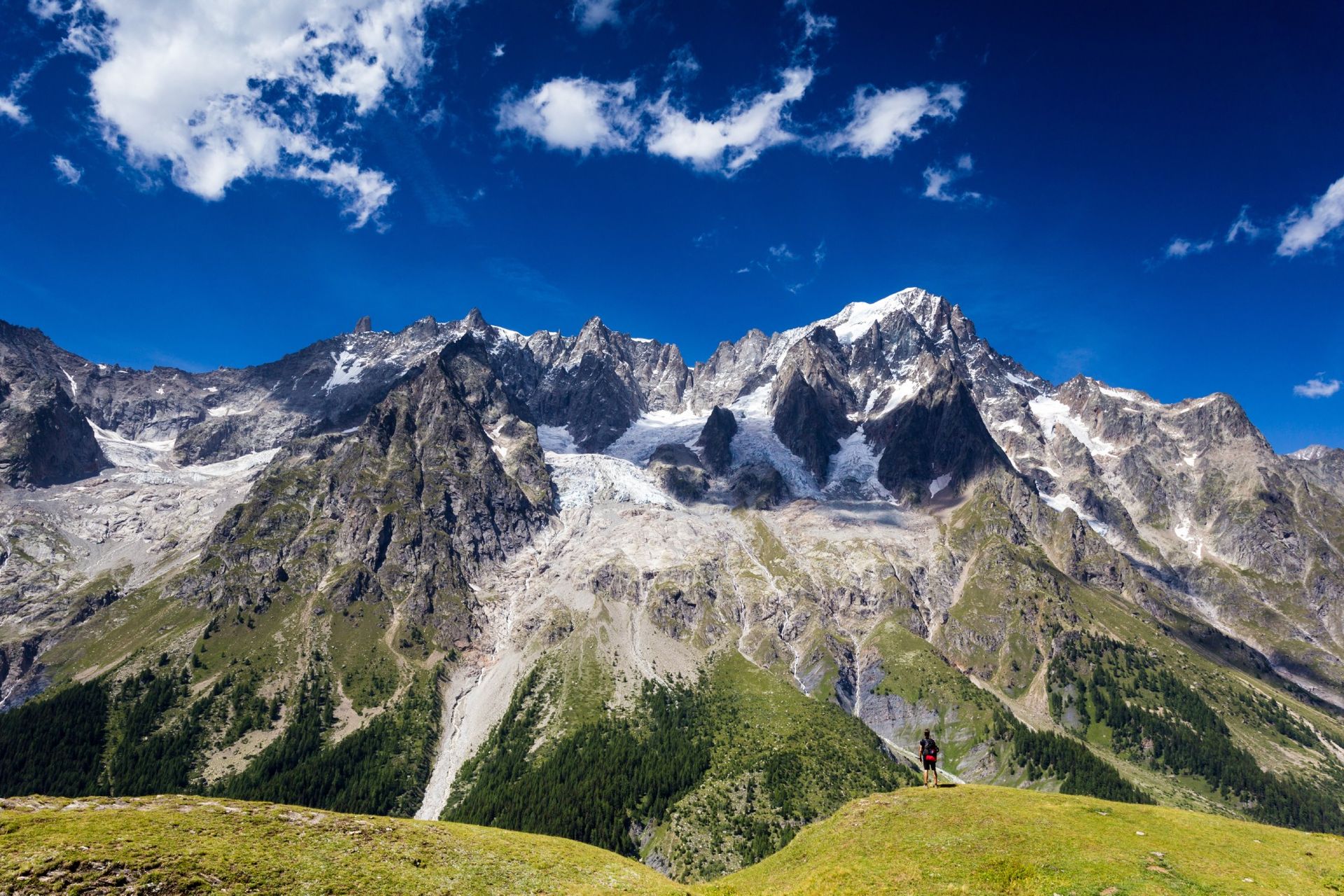
You need good hiking fitness, not an athlete's résumé. The honest benchmark is this: can you comfortably hike for six to eight hours, climb and descend several thousand feet, and then get up and do something similar the next morning? If you are not there yet, that is exactly what a training plan builds toward.
Plenty of first-time multi-day trekkers complete the TMB every season. The people who struggle are rarely the ones who lacked talent; they are the ones who skipped the training. Months of steady preparation matter far more than raw natural fitness.
What Makes the Tour du Mont Blanc Physically Demanding
To train for something, you have to know what it actually asks of you. On a guided Tour du Mont Blanc, the daily reality looks like this:
- Long hours on your feet: about six to eight hours of hiking most days.
- Real distance: up to roughly nine miles a day.
- Serious up and down: some days climb more than 3,000 feet, and others descend more than 4,000.
- Day after day: the challenge is cumulative, not a single big push.
Notice what is not on that list: a crushing pack. That changes how you should train, and we come back to it below.
The Four Pillars of Tour du Mont Blanc Training
Strong TMB preparation rests on four things. Build all four and the trail feels manageable; skip one and it will find you.
1. Cardio endurance. The foundation. You are training your body to keep going for hours, not to go fast. Hike, walk briskly, run, cycle or swim two to four times a week, keeping most sessions in the 45-to-60-minute range and building from there. The goal is to make "all day on my feet" feel normal.
2. Hills and elevation. The TMB is relentless up and down, so flat miles alone will not prepare you. Find the steepest local trails you can and hike them up and down. Work toward handling a few thousand feet of elevation change in a single outing without falling apart.
3. Downhill conditioning. The one most people neglect (more on this next). Practice walking downhill, and add slow, controlled step-downs to toughen your knees and quads for hours of descent.
4. Strength and core. Strong legs power you up the switchbacks; a strong core keeps you steady and ache-free over long days. One or two short strength sessions a week, focused on squats, lunges, step-ups, calf raises and planks, is plenty.
For the basics of preparing your body for a big hike, our guide to training for your adventure is a good companion to this plan.
Your Week-by-Week Tour du Mont Blanc Training Plan
Here is a simple progression. Adjust it to your starting fitness, and if you are new to exercise or have any health concerns, check with your doctor before you begin.
Months 5-6 out: build the base. Two or three cardio sessions a week (walk, hike, jog, bike), 45 to 60 minutes each, plus one easy strength session. End each week with a longer walk or hike of two to three hours. The goal is simply to move consistently and build the aerobic engine.
Months 3-4 out: add hills and strength. Keep the midweek cardio, add a second strength session, and start putting hills into your weekends. Build your long hike toward four to five hours on rolling or steep terrain. Begin hiking with a light daypack so your shoulders and back get used to it.
Months 1-2 out: go long and back-to-back. This is where you simulate the trip. Stretch your long weekend hike toward six to eight hours on the steepest terrain you can reach, and pair it with a second long hike the very next day. Deliberately seek out big descents. By now you should be hiking comfortably with the daypack you will actually carry.
Final 2 weeks: taper. Ease off. Cut the volume, keep your legs moving with shorter, easier sessions, rest, and arrive fresh. Training hard in the last week does more harm than good.
The single most useful workout in this whole plan is the long, hilly, back-to-back weekend. If you only protect one thing, protect that.
Train for the Descents (the Part People Get Wrong)
Almost everyone trains to go up. Far fewer train to come down, and the TMB will remind them. Hours of steep descent are what shred the quads and ache the knees, and they often hurt more the next morning than the climbs ever did.
So make downhill a deliberate part of training. Walk down every hill you climb instead of looping back the easy way. Add eccentric strength, slow step-downs off a box or stair, controlling the lowering. Use trekking poles to take load off your knees, and learn to use them well before the trip. A little knee and quad conditioning now buys you a lot of comfort on the trail; our notes on preventing common hiking injuries go deeper.
How to Train If You Live Somewhere Flat
No mountains nearby? You can still build climbing legs.
- Stairs: a stadium, a tall parking garage, or a long staircase, repeated.
- Treadmill on a steep incline: crank it up and hike, don't run.
- Stairmaster: the closest gym machine to a real climb.
- Weighted step-ups onto a sturdy box or bench.
For descents specifically, the controlled step-downs above are your best substitute. Flat long walks still build the endurance base, so keep them in the rotation too.
Good News: You Only Carry a Daypack
Here is where a lodge-based trip changes your training. On our guided Tour du Mont Blanc trek, your main bag is transported ahead to each night's inn (one bag per person, up to about 33 pounds), so on the trail you carry only a light daypack, roughly 10 to 20 pounds with water, layers and lunch.
That is a real gift to your preparation. You do not need to train your body to haul a 35-pound backpacking load up an Alpine pass. You can spend that energy where it counts, on endurance and on those descents, and train with the light pack you will actually wear. Lighter on the back, the same big days underfoot. When it is time to fill that daypack, our Tour du Mont Blanc packing list shows exactly what to carry.
Gear to Train In, and Break In
Train in the gear you will travel with, especially the two things that cause the most grief:
- Boots or hiking shoes: break them in over long miles, not on day one of the trip. Any hot spot should show up at home where you can fix it.
- Socks: find the pair that keeps your feet dry and blister-free, and buy a few.
- Daypack and poles: wear the pack on your long hikes and dial in the poles so they feel like extensions of your arms.
Don't Forget Mental Preparation and Recovery
Fitness is only half of it. The TMB is long, and there will be a wet afternoon (Alpine weather turns fast) or a brutal climb where the work is as much mental as physical. Practicing long days teaches your mind, not just your legs, that you can keep going.
Recovery deserves the same respect during training: sleep well, eat enough, hydrate, and take your rest days. The fitness is built on the recovery, not in spite of it.
Let Four Season Guides Handle the Logistics. You Handle the Training.
The beauty of a guided trip is that fitness becomes the one thing you have to bring. We have spent more than twenty-five years handling the dirty work of an adventure so our guests can focus on the experience, and the Tour du Mont Blanc is no different. Your route, your pacing, your luggage transport and your comfortable inns each night are taken care of. Train well, and the rest of hiking in the Alps is just one extraordinary day after another.
Frequently Asked Questions
How long do you need to train for the Tour du Mont Blanc?
Most hikers should train for three to six months. If you are starting from a low fitness base, give yourself the full six months so you can build gradually and avoid injury.
How fit do you need to be for the Tour du Mont Blanc?
Good hiking fitness rather than athletic perfection. You should be able to comfortably hike six to eight hours and handle a few thousand feet of climbing and descending in a day, then repeat it the next morning.
Can a beginner hike the Tour du Mont Blanc?
Yes, with consistent training. Many first-time multi-day hikers complete it. The key is building up to long, back-to-back days and conditioning your legs for the descents.
Do you really need to train for the descents?
Yes. The long downhills are the most under-trained part of the TMB and the most common source of sore knees and quads. Practice walking downhill and add slow step-downs to your routine.
How do I train for the Tour du Mont Blanc if I live somewhere flat?
Use stairs, a stairmaster, a steep treadmill incline and weighted step-ups to build climbing strength, and controlled step-downs for the descents. Long flat walks still build useful endurance.
Do I have to carry a heavy backpack on the Tour du Mont Blanc?
Not on a lodge-based trip. Your main luggage is transported between inns, so you carry only a daypack of about 10 to 20 pounds with the day's essentials.
When should I break in my boots?
Weeks to months before you go. Wear them on your long training hikes so any problems surface at home, not on the trail.
Four Season Guides, 506 N Grant St suite o, Flagstaff, AZ 86004, United States
+19285251552
35.19653980, -111.62000560
Read More