What It's Like to Visit Death Valley in April
April is Death Valley's transition month. The cool, hike-friendly conditions of February and March are giving way to the warming temperatures that signal summer is coming. By month's end, midday temperatures at Badwater Basin can flirt with 95°F. But early April still offers the rare combination of comfortable mornings, dramatic light, and the last credible window for wildflowers in a normal water year. For visitors willing to start hikes at sunrise, April is one of the best months to experience
Death Valley.
Key Takeaways
- Early April is still hike-friendly: morning temperatures in the 50s°F, midday highs in the 80s°F. Late April begins approaching summer extremes.
- Wildflower bloom in Death Valley peaks February–March in most years but can extend into early April at higher elevations (Wildrose, Aguereberry Point).
- Start all hikes at or before sunrise. By 10 a.m. in mid-April, exposed valley-floor trails are uncomfortable; by noon they're hazardous.
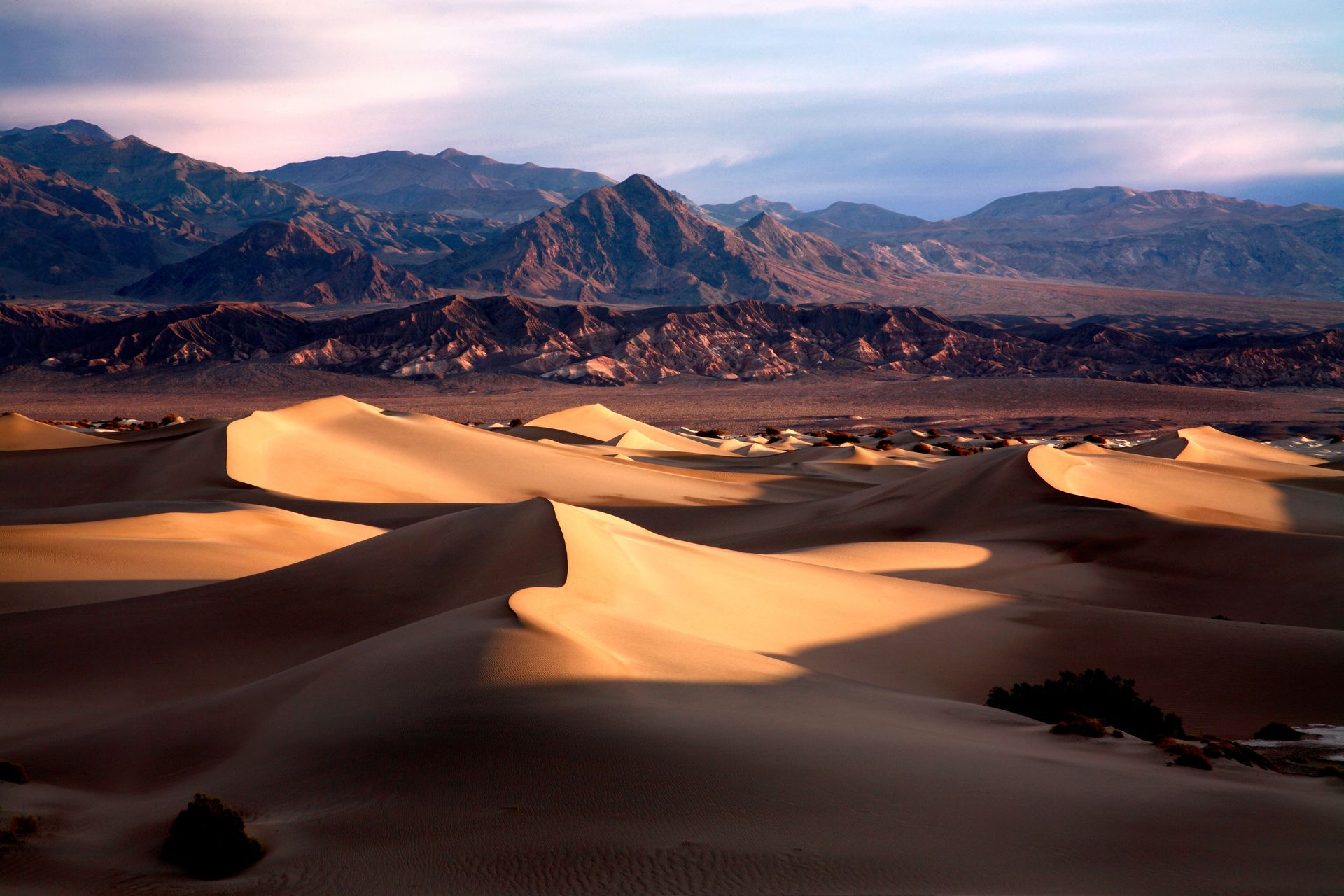
- Iconic stops are open and accessible: Badwater Basin, Mesquite Flat Sand Dunes, Zabriskie Point, Artist's Drive, Ubehebe Crater, Dante's View.
- Carry more water than you think you need. The dry desert air can dehydrate visitors faster than they realize, even when air temperatures feel manageable.
- A Four Season Guides Death Valley trip gets you to less-crowded routes with expert pacing and water management.
Death Valley National Park Weather in April: What to Expect
April marks Death Valley's transition from spring to summer—comfortable in the morning, hot by afternoon.
- Valley floor (Badwater Basin, -282 ft): daytime highs 82°F to 95°F (28°C to 35°C), overnight lows 55°F to 65°F (13°C to 18°C). Highs increase steadily through the month.
- Furnace Creek (-190 ft): similar to Badwater, slightly cooler at night. Most park infrastructure is here.
- Higher elevations (Wildrose, 4,000+ ft): 15–20°F cooler than the valley floor. Telescope Peak (11,049 ft) still holds snow.
- Precipitation: nearly zero. Dry desert air pulls moisture from your body—you'll need more water than the temperature suggests.
Advantages of Visiting Death Valley National Park in April
1. Comfortable Mornings & Striking Light
Sunrise hikes in early April are some of the most rewarding desert experiences anywhere. Mosaic Canyon, Golden Canyon, and Natural Bridge are all walkable in the cool of the morning, with the dramatic Death Valley light at its softest.
2. Lower Crowds Than Spring Break
Death Valley's peak visitation runs February and March. By April, crowds thin meaningfully. Mid-week April days at Badwater Basin or Mesquite Flat Sand Dunes can feel surprisingly empty.
3. Last Wildflower Window (in Good Years)
In wet winters, wildflower bloom extends from late February through early April at higher elevations. The hills above Wildrose and around Aguereberry Point can show purple and yellow bloom into the second week of April.
Challenges of Visiting Death Valley National Park in April
1. Building Heat
By the end of April, Death Valley's afternoon temperatures regularly hit 95°F. Sunrise starts become non-negotiable for any hike longer than a mile. Telescope Peak attempts shift from spring-friendly to dangerously hot in late April.
2. Limited Shade
Most Death Valley trails offer zero shade. Even short hikes (Golden Canyon, Mosaic Canyon) feel intense by midday. Plan all activity around the dawn-to-9 a.m. window.
3. Hydration Demands
The dry desert air will dehydrate you faster than you realize. The standard recommendation is 1 liter per hour of hiking—double that in afternoon heat. Carry electrolyte mix and salty snacks, not just water.
Best Activities for April Visitors
- Dawn drives: Zabriskie Point at sunrise, Dante's View for panoramic basin views, Artist's Drive for color and shape.
- Short hikes (start at sunrise): Mosaic Canyon (4 miles), Golden Canyon to Red Cathedral (3 miles), Natural Bridge (1 mile).
- Sand dunes: Mesquite Flat Sand Dunes at sunrise or sunset—the light is dramatic and the dunes are walkable.
- Guided trips: Four Season Guides operates
Death Valley itineraries with water-and-heat-managed pacing, route choice, and lodging coordination.
When Is the Best Time to Visit Death Valley National Park?
Death Valley is a winter park—the best months for hiking are October through April:
- November–March: ideal hiking weather (daytime highs 60–80°F), peak wildflower months in wet years (late Feb to mid-March typically), highest crowds.
- April: warming, with the last weeks getting hot. Sunrise starts essential.
- May–September: dangerous heat (110°F+ valley floor). Not recommended for hiking. Telescope Peak is the only somewhat-viable route.
- October: cooling down, low crowds, generally pleasant.
What to Pack for Death Valley National Park in April
Death Valley in April is the last warm-but-not-deadly window. Pack like summer hiking elsewhere, then add 25%.
- Lightweight, light-colored long-sleeve sun shirts (white reflects heat; long sleeves prevent UV burn)
- Hiking pants or shorts (your call — long sleeves up top are essential, pants are optional)
- Wide-brim sun hat with neck flap; baseball cap is inadequate
- Polarized sunglasses (reflects off salt flats are intense)
- Closed-toe hiking shoes — flip-flops and sandals are dangerous in this terrain
- MINIMUM 3 L water per person per HALF day; carry 5+ L if you're doing more than 2 miles
- Electrolyte mix (Liquid IV, Nuun, or similar) — water alone won't replace sweat losses
- Salty snacks: pretzels, salted nuts, jerky
- Cooling neck wrap or evaporative cooling towel
- Headlamp + extra batteries for dawn starts
- Emergency: cell phone + offline downloaded maps (signal is non-existent in most of the park)
Where to Stay in Death Valley National Park
Death Valley's lodging options are limited but well-positioned:
- Furnace Creek (central): The Inn at Death Valley (upscale, AAA Four Diamond) and The Ranch at Death Valley (mid-range with pool). Closest to the visitor center, Badwater, and Zabriskie Point.
- Stovepipe Wells: Stovepipe Wells Hotel — basic, well-priced, closer to Mesquite Flat Sand Dunes and Mosaic Canyon.
- Panamint Springs Resort: small, remote, on the park's western edge. Best for travelers continuing to Sequoia / Eastern Sierra.
- Camping in-park: Furnace Creek Campground (RV hookups, reservable), Texas Springs (tent-friendly, walk-in), Sunset Campground (basic, first-come). April nights are cool — comfortable camping conditions.
- Outside: Beatty, Nevada (1 hour) or Pahrump, Nevada (1.5 hours) offer more options. Both are bases for a one-night DV visit, but in-park lodging gives much better sunrise/sunset access.
Pro Tips for Visiting Death Valley National Park in April
What experienced Death Valley visitors know:
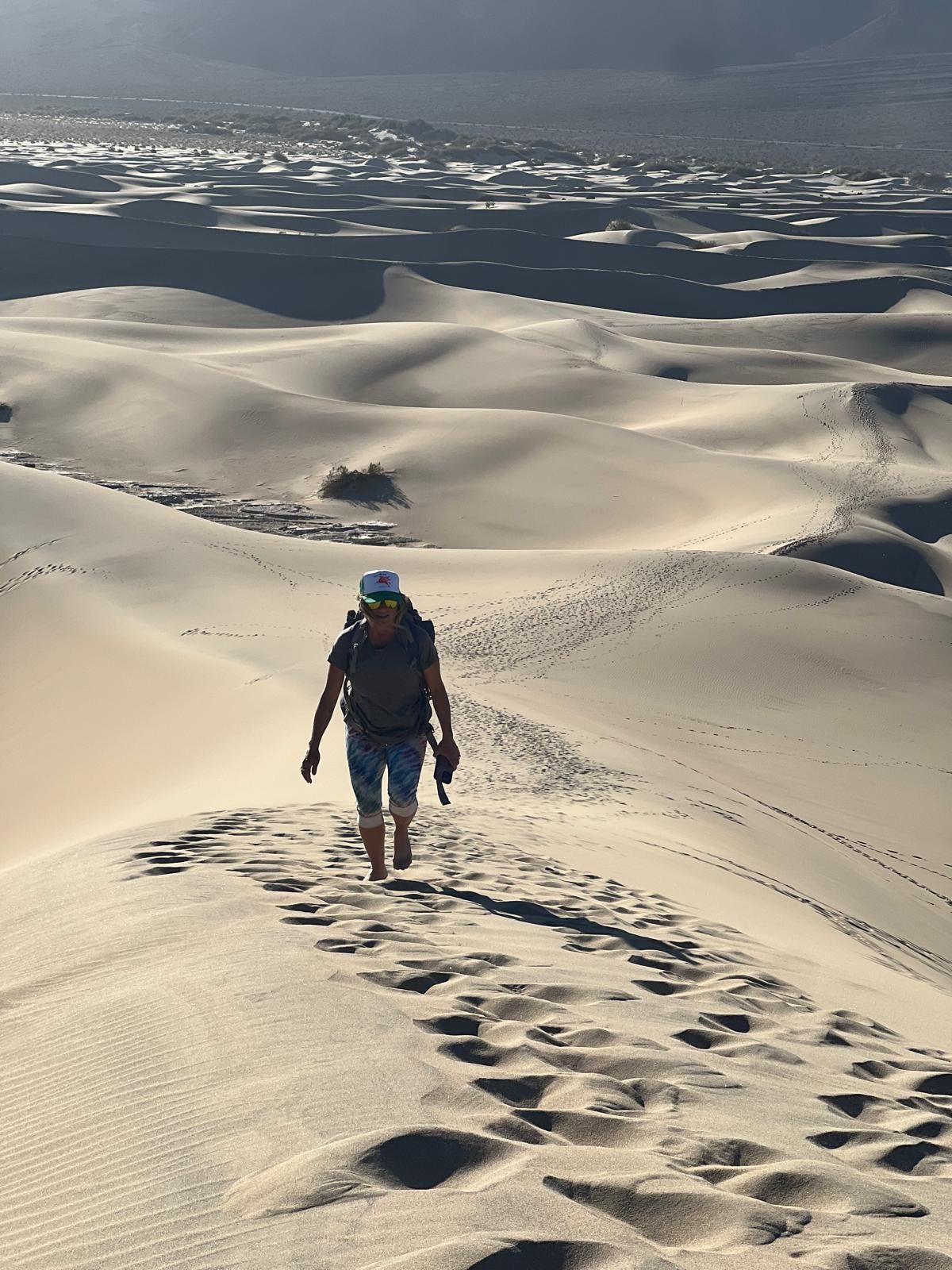
- Start hikes AT sunrise. Not 'around sunrise' — at the actual sunrise. By 9 a.m., exposed trails on the valley floor are uncomfortable; by 11 a.m. they're dangerous.
- Cell service is non-existent. Download all maps to your phone before entering the park, and tell someone your itinerary.
- Gas is expensive and limited. Fill up in Beatty, Pahrump, or Lone Pine before entering. Furnace Creek and Stovepipe Wells have gas at premium prices.
- Zabriskie Point at sunrise is the iconic Death Valley shot. The viewpoint is right off the road — easy access, dramatic payoff.
- Dante's View (5,475 ft) gives the panoramic Badwater Basin view from above. The drive up is steep but doable in any vehicle.
- Telescope Peak (11,049 ft) is a strenuous 14-mile round trip with snow possible in early April. Acclimatize before attempting.
- Wildflower bloom (when it happens) is best on the Wildrose Road and around Aguereberry Point. Check NPS wildflower update before your visit.
Frequently Asked Questions
Is April too hot for Death Valley?
Early April is fine for hiking with sunrise starts. Late April approaches summer extremes (95°F+) and requires extreme heat management. By May, hiking is not recommended.
What's the temperature in Death Valley in April?
Daytime highs 82°F to 95°F at the valley floor, overnight lows 55°F to 65°F. Higher elevations are 15–20°F cooler. Highs increase steadily through the month.
Are wildflowers blooming in Death Valley in April?
Sometimes. In wet winters, bloom extends from late February through early April at higher elevations. In dry years (the most common), April wildflowers are sparse. Check the NPS Death Valley wildflower update before visiting.
What activities are best in Death Valley in April?
Sunrise drives (Zabriskie Point, Dante's View), short morning hikes (Mosaic Canyon, Golden Canyon), and the Mesquite Flat Sand Dunes at sunrise or sunset.
Do I need to start hikes early in April?
Yes—essential. By 10 a.m., exposed trails on the valley floor become uncomfortably hot. By noon they're hazardous. Plan all hikes for the dawn-to-9 a.m. window.
What should I bring to Death Valley in April?
More water than you think (3+ liters per person per day), electrolyte mix, salty snacks, wide-brim hat, high-SPF sunscreen, sunglasses, lightweight long sleeves to block sun, and sturdy hiking shoes.
Where are the best campsites in Death Valley?
Furnace Creek (full hookups, reservation system, closest to amenities), Texas Springs (tent-friendly, walk-in spots), and the free dispersed camping areas with appropriate permits. April nights are cool enough to camp comfortably.
How many days do I need in Death Valley in April?
Two to three days lets you see the major viewpoints (Zabriskie, Dante's View, Badwater), the dunes, and one or two short hikes. Add a day for Telescope Peak (if early April and you're acclimated to elevation).
Where should I stay in Death Valley?
Inside the park: The Inn at Death Valley (upscale), The Ranch at Death Valley (mid-range), Stovepipe Wells Hotel (budget). Outside: Beatty (Nevada, 1-hour drive) and Pahrump (1.5 hour drive) offer more options.
How much does it cost to enter Death Valley National Park?
Standard vehicle pass is $30 (good for 7 days). Annual park-specific pass is $55. America the Beautiful interagency pass ($80) covers all national parks for a year.
Plan Your Death Valley National Park Adventure with Four Season Guides
April in Death Valley is the last comfortable hiking window before summer makes the park inhospitable. Four Season Guides operates Death Valley trips with the heat management, route choice, and pacing expertise that turns a potentially grueling trip into an exceptional one.
Contact Four Season Guides to plan your April Death Valley adventure.
Four Season Guides, 506 N Grant St suite o, Flagstaff, AZ 86004, United States
+19285251552
35.19653980, -111.62000560
Read More